

News Flash! A Faster 6.5 Creedmoor

Federal’s New 6.5 Creedmoor+Peak Adds Speed to Your Creed
By John Geiger, Safari Club International Managing Editor
Creedmoor. Bleedmoor. Needmoor. Whatever you call this well-known cartridge, it just got better.
Federal is bringing its successful Peak Alloy case technology — which was a game-changer when introduced in 7mm Backcountry last year — to other chamberings. The first one on the list is, you guessed it, 6.5 Creedmoor. Meet 6.5 Creedmoor+Peak.
By using a proprietary steel-alloy case, which the company calls Peak Alloy, and loading the cartridge to 80,000 psi rather than the standard 65,000 psi, Federal has improved the 6.5 Creedmoor. Shooters can now get more than 3,000 feet per second from standard 130-grain hunting bullets.
“Speedmoor” anyone?
And you don’t have to buy a new rifle; the new load fits most modern rifles chambered in 6.5 Creedmoor. A few models, like CVA’s Scout and some AR-10s, are not suited for the higher pressures, according to Federal. If you have any concerns, check with your rifle’s manufacturer just in case.
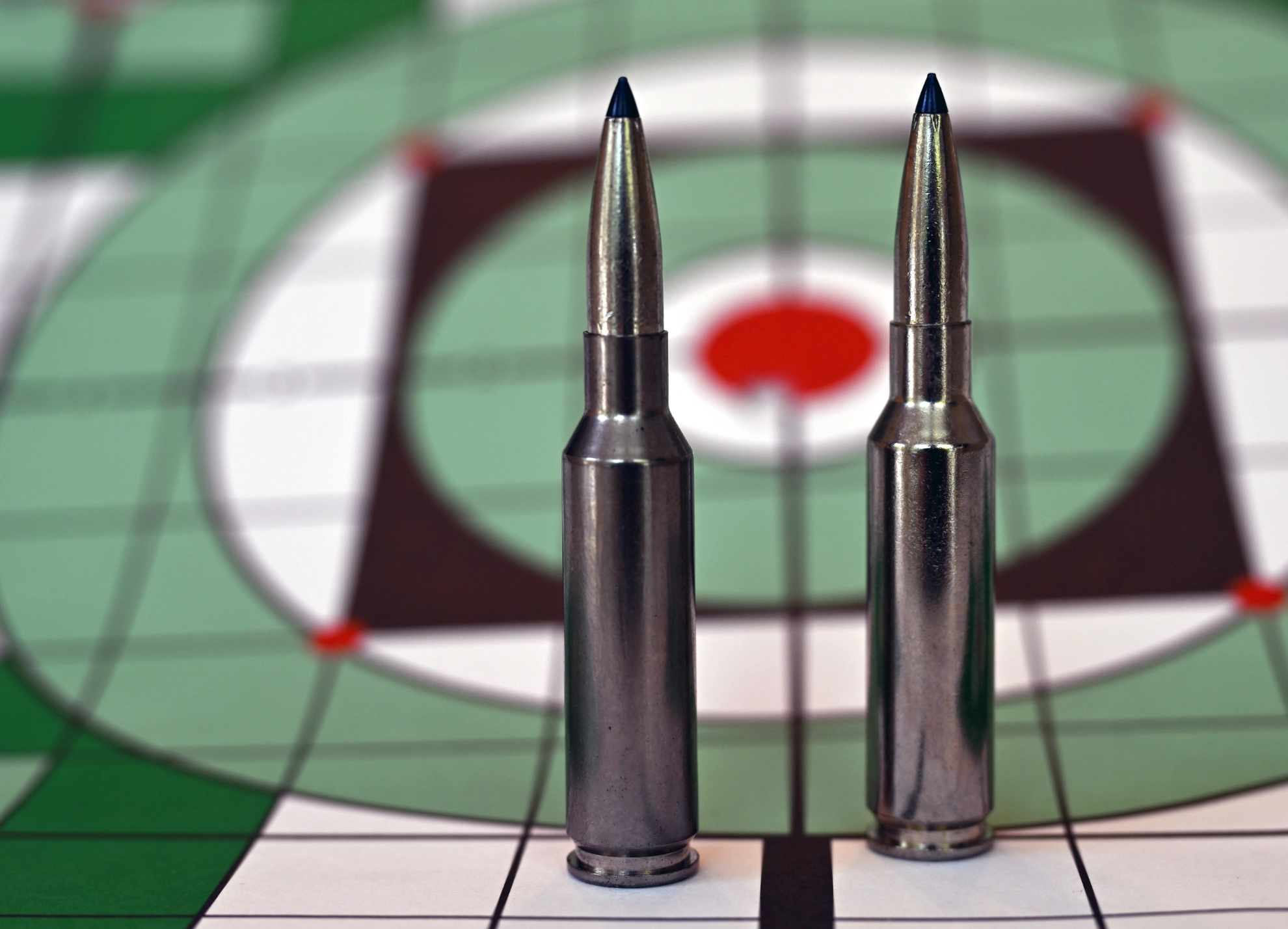
Federal just released a major improvement to the 6.5 Creedmoor cartridge. The new 6.5 Creedmoor+Peak, right, uses a steel-alloy case and is loaded to higher pressures to add another 300 fps or so to the performance of your current 6.5 Creedmoor rifle. At left, is an original 6.5 Creedmoor round with a brass case. You’d need to see the headstamp to tell them apart because they have identical dimensions. That means there’s no need to get a new rifle.
Our Tests
We loaded pre-production 6.5 Creedmoor+Peak rounds into a rifle with a Savage 110 action and a 22-inch barrel to see if the velocities we recorded at the range matched Federal’s claims. The Garmin Xero C1 Pro chronograph measured the first shot from a cold barrel at 3,101 fps. The fastest shot of the session was 3,125 fps, while the lowest velocity measured 3,070 fps.
Federal’s new load passed the speed test.
We also shot the original 130-grain Federal Terminal Ascent 6.5 Creedmoor ammunition for comparison. The original load’s max velocity was 2,787 fps and its minimum was 2,768 fps. During our limited test using pre-production ammo, the new 6.5+Peak shot an average of 324 fps faster than the original.
That additional speed equates to an increase of 548 foot-pounds of energy at the muzzle, according to our tests. In practical terms, what does an extra 300 fps mean for the average hunter?
If you shoot 6.5+Peak ammunition rather than other 6.5 Creedmoor loads, you’ll be shooting a faster bullet with a flatter trajectory. That could help you extend your ethical range. Plus, you will need less holdover and less dialing, so you could see better accuracy at longer ranges. Not bad for simply buying new ammo — which will cost about the same as the old version — without the need to buy a new rifle to get the increased performance.
If you use a suppressor, you’ll be able to maintain high velocities even with a shorter-barreled rifle. That was the main attraction of the 7mm Backcountry cartridge back in 2025 at its introduction, the only cartridge to use Peak Alloy technology until this point. In the 7mm BC, shooters got around 2,800 fps with a 155-grain bullet — even from a 16-inch barrel.
Hunters who use suppressors regularly know that the noise-suppression devices add several inches to the length of the rifle; a short barrel helps manage the imbalance and prevents an extra-long barrel from catching on trees and bushes. The 6.5 Creedmoor+Peak will do the same as the 7mm BC: It will keep velocities up in shorter-barreled rifles.
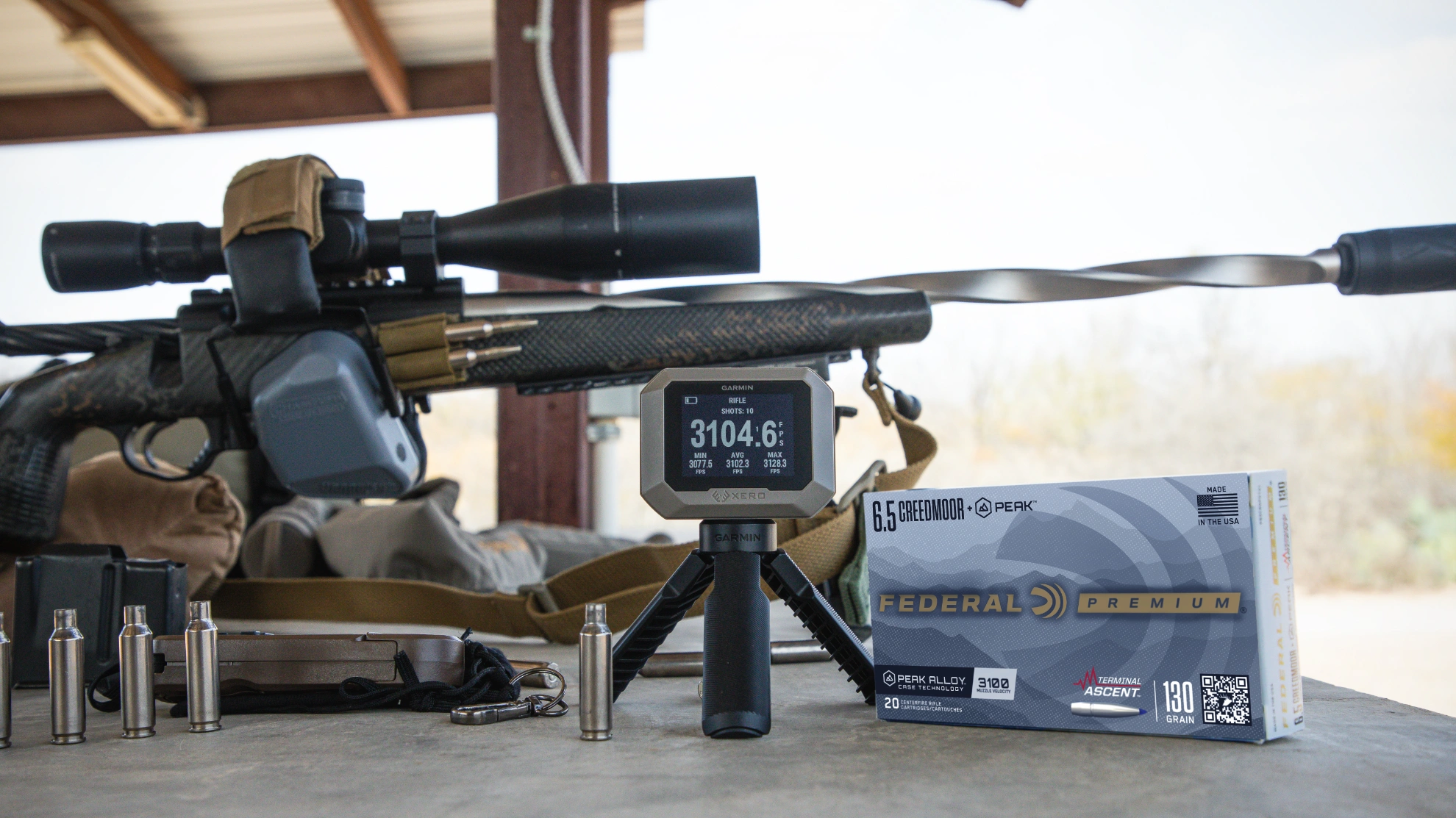
Practically speaking, this new and improved Creedmoor sends bullets faster, flatter and farther than your father’s Creedmoor. That means a lot, especially if you enjoy shooting a short-barreled rifle with a suppressor. You get to keep your velocities up and the overall gun length down.
In addition to using 130-grain Terminal Ascent bullets, Federal will also be loading various other weight and bullet styles into Peak Alloy cases for the 2026 fall hunting season:
- 127-grain Barnes LRX
- 153-grain Sierra Tipped MatchKing
- 155-grain Fusion Tipped, and
- 156-grain Berger Elite Hunter
While it was possible to top 3,000 fps with a 6.5 Creedmoor-chambered rifle before today, the bullet would have to be very light, around the 90-grain range. That is arguably too light for most medium- and big-game animals, such as deer, antelope and some African plains game. For example, Hornady’s V-MAX has a muzzle velocity of 3,300 fps from a 24-inch barrel (per Sporting Arms and Ammunition Manufacturers’ Institute standards), but it’s a 95-grain bullet. Winchester, Sierra and Norma also make 95-grain bullets that can achieve 3,000 fps, but these bullets are made specifically for varmint hunting not big game.
For context, this new Creedmoor load is shooting faster than a similar bullet shot from a 6.5 PRC-chambered rifle. The PRC bullet has a muzzle velocity of about 2,800 fps to 3,000 fps from a 22-inch barrel, according to published data. What makes this most impressive is that a factory-loaded PRC takes about 60 grains of powder while a 6.5 Creedmoor uses only about 40 grains, depending on the load.
MILITARY VALIDATES PEAK ALLOY
If there was any question about whether Federal’s Peak Alloy does what it’s designed to do, it was put to rest recently when the U.S. military ordered 40 million cases. The Pentagon reportedly wants to use them with cartridges up to .50 caliber.
Federal is part of The Kinetic Group, which is owned by CSG, a global industrial group based in the Czech Republic, so it’s likely that several European NATO countries will soon follow their lead.
DOWNSIDES
If there are any downsides to this new configuration, one may be that a big draw to the original 6.5 Creedmoor in the first place was its reduced recoil. The 6.5 Creedmoor’s bullet design allows it to fly fast, buck wind and shoot flat with minimal recoil. By upping the pressure of this new load, recoil-wise, it shoots more like a 7mm, such as 7mm-08 or 7mm PRC, than the original Creedmoor.
We shot the original, non-Peak Alloy Federal Terminal Ascent round side-by-side with the new product. The difference was noticeable; it’s still a lighter-kicking cartridge, but there is a bigger boom and a stronger nudge when the sear is tripped.
Recoil was still nowhere near a .30 caliber, but the difference was noted even before the side-by-side comparison.
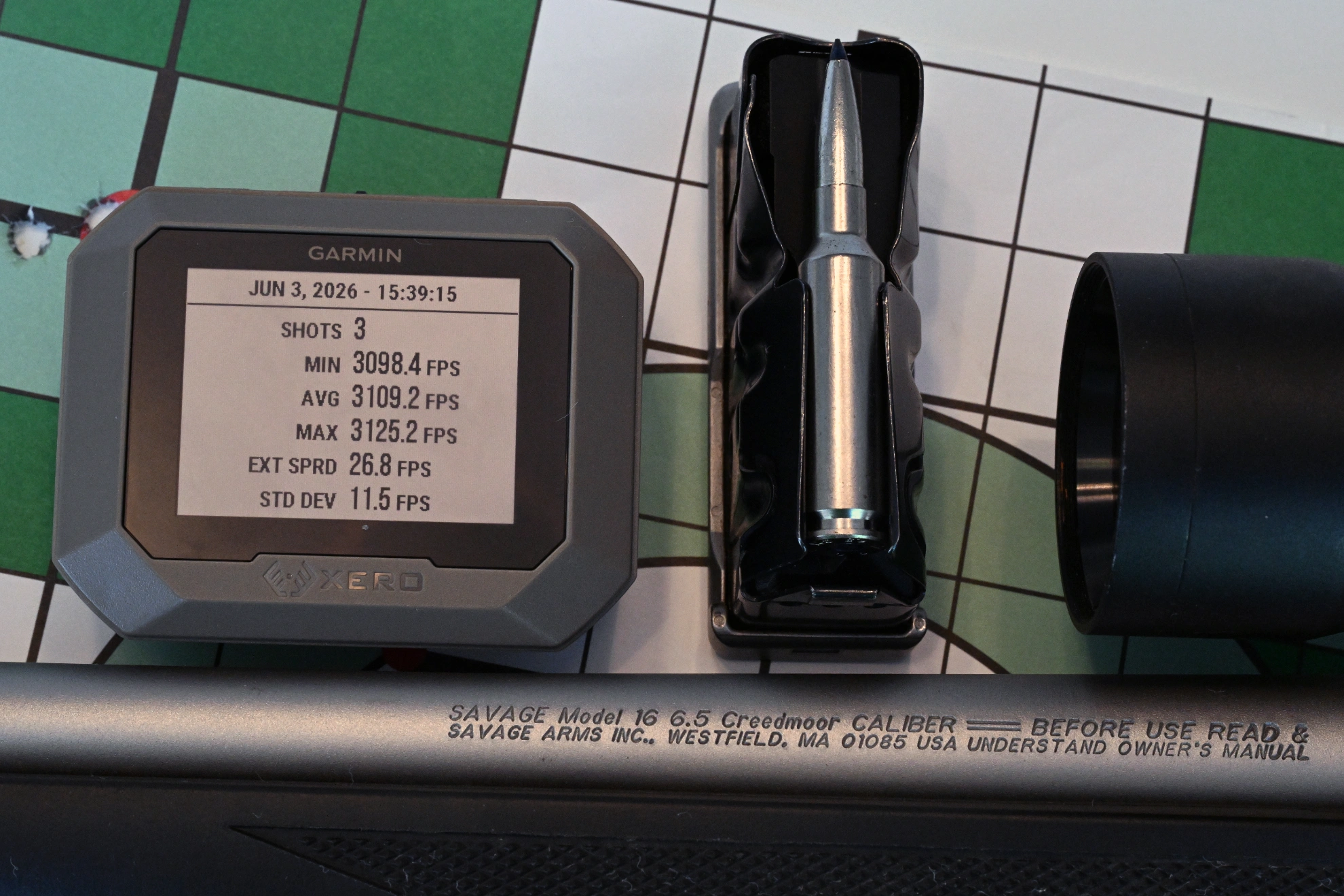
We shot the new 6.5 Creedmoor+Peak at an indoor range and saw velocities top 3,125 fps through the 22-inch barrel of an everyday Savage Model 16.
We tested 6.5 Creedmoor+Peak at an indoor range where sound was magnified. Outdoors with a suppressor, it’s likely the increased decibels and perceived recoil would be minimal.
And then there is safety. Federal cautions that not all rifles will be able to shoot this new configuration safely. Specifically, the company cautions shooters who run a CVA Scout rifle as well as AR-10s.
If you shoot anything other than a common action — such as Remington Model 700 clones, Savage 110s, Winchester Model 70 clones, falling blocks and lever actions — we recommend contacting the gun’s manufacturer to confirm whether its capable of shooting higher pressures safely.
However, will these higher pressures wear out a barrel sooner? Federal engineers said they have collaborated with rifle manufacturers and have not seen additional wear. Federal also tested 7mm BC with modern rifles and concluded that wear of the barrel, throat and extractors was no different than legacy 7mm cartridges.
This new load has not yet been approved by SAAMI, but it is being submitted this summer during a special session.
Additionally, Federal cautions users to avoid over-lubing their chambers. According to the company, “While lubing your rifle after use is recommended for gun storage and maintenance, it is important to ensure your chamber is clean and dry before use. Using any ammunition, including ammunition with Peak Alloy cases, in heavily lubed chambers may damage your rifle.”
Conclusion
There always has been and always will be those shooters who say we do not need another iteration of our legacy cartridges, and that there is nothing new under the sun.
Yes, it’s true that we may not “need” a new variant, but it’s good to have options. Federal has now given us another option for hunting big game. The company also gave us the opportunity to use a shorter barrel and still maintain the velocities we want.
The new ammunition is not expected to cost more than the original 6.5 Creedmoor options, and there likely will not be rifles stamped “6.5 Creedmoor+Peak” because the cartridge dimensions are exactly the same as the original.
Regarding accuracy, the jury is still out because the rounds we received ahead of the release date were not produced on the line at the Federal facility in Anoka, Minnesota. They were put together by company engineers for velocity testing by the media and not loaded for accuracy. True production ammo will need to be tested when it becomes available soon.
Incidentally, the ammo did shoot consistently and printed small groups, for what it’s worth at this point. When Federal released 7mm Backcountry last year, there was some concern about accuracy from various corners of the internet, but our hunting and testing showed industry-standard accuracy. Expect accuracy tests from SCI writers soon after the 6.5 Creedmoor+Peak factory ammo becomes available publicly.
One big point of debate on the internet is whether it’s ethical for a hunter to use 6.5 Creedmoor when targeting elk. So, does this new version make 6.5 Creedmoor more appropriate for elk hunting? A few hundred extra feet per second of velocity does not automatically elevate this new load into the realms of the .30 calibers. It’s the same .264-inch bullet diameter. Yet it is faster, and it does deliver a bigger punch.
We’ll let the interweb take it from here.