
How Best to Pierce the Darkness? Night-Vision Versus Thermal

Both night-vision and thermal-imaging optics have a place in the predator hunter’s kit, but they operate in fundamentally different ways and provide different benefits to the user as a result. Which one is right for you?
By Kelly Young, Editor In Chief
A big part of the appeal of hunting is the lifelong memories that trips afield can create. In my experience, a hunter’s first interaction with either a night-vision or thermal-imaging optic is almost always so memorable that he or she never forgets it — or the grins and sense of wonderment that accompanied it. Peering through a high-quality example of either of these types of electronic optics is a surreal experience, where the invisible not only becomes visible, but it is presented to the user so vividly that your target escaping your notice basically becomes an impossibility.
But these tools aren’t just all fun and games. These technologies so thoroughly alter how we can experience the world around us after the lights go out that they can represent true game-changers for shooters of all stripes. However, it’s us hunters who reap the most benefit from all that these night-capable optics have to offer.
One second, you’re seemingly sitting alone, staring into the inky blackness of a pitch-black night, unable to see your hand held only inches from your face. The next moment you flip the optic on, and you’re suddenly covertly surveilling a large sounder of hogs as they root through your field. And with that electronic riflescope mounted atop and zeroed to your rifle of choice, you are now fully equipped to do something about it.
The U.S. Department of Agriculture estimates that the amount of damage caused by the predation of coyotes each year is roughly $115 million. This is a substantial amount, but it’s a drop in the bucket compared to the $2.5 billion lost annually due to ground damage and crop destruction caused by feral hogs. So, for ranchers and farmers plagued by these and other varmints, proactive efforts to combat these invaders aren’t just a good idea — they are absolutely essential to safeguarding their livelihood.
Night-vision and thermal riflescopes are indispensable aspects of a night hunter’s arsenal because they allow a sportsman to take the fight to vermin such as these during the hours when they are most active: from dusk until dawn. But while both types of optics provide a way for hunters to observe the world around them in low-light conditions — and both have their own appropriate place within a predator hunter’s kit as a result — they operate in fundamentally different ways that allow each to excel in certain areas more than the other. So, which is right for you?
But before we delve too deeply into the relative practical benefits of night-vision and thermal optics, we need at least a layman’s understanding of how each works so that we have a basic sense of what is being presented to us when we look through their respective viewfinders. Unfortunately, there are also legal considerations to be aware of, as the purchase or possession of electronic optics such as these are regulated in some areas, so be sure to check your local laws before venturing too deeply down this rabbit hole — lest the journey end in disappointment.
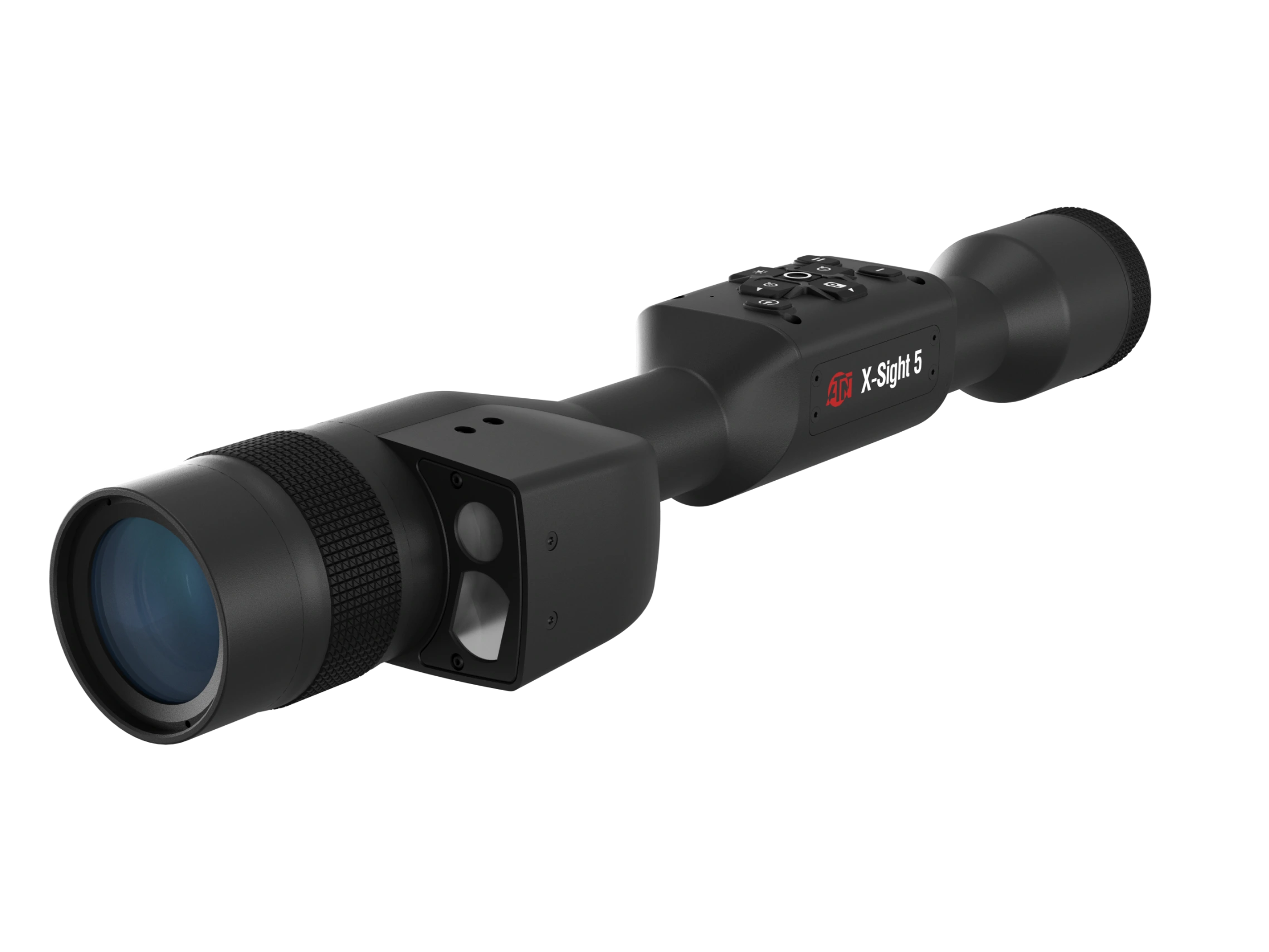
Familiar to Mount
Night-Vision Optics: Making a Lot Out of a Little
Night-vision devices (NVDs) operate by amplifying all available ambient light, whether from natural or artificial sources. In overly simplistic terms, as light particles pass through the optic’s objective lens, they are converted into electrons (in older, traditional night-vision models) or electrical signals (modern digital night-vision). These are then multiplied exponentially within the optic — either by an image-intensifier tube in older models or a digital sensor array in digital devices.
These signals then are converted back into particles of light to form the display that is presented to the user in the viewfinder. Night-vision optics traditionally displayed their images in green hues, which was chosen due to the human eye’s high sensitivity to that color. Just be aware that older models of this type are not capable of daytime use without a specialized lens cover.
Night-vision systems have gone through four generations since their initial development by the German military during World War II. Early models are now considered Gen 0 devices, with Gen 3 being the highest level that is currently officially recognized by the U.S. military.
The resolution offered by some of the initial iterations was pretty basic, but image clarity and detection range have improved greatly in recent decades. While 75 yards was about as far as a Gen 1 NVD could be expected to illuminate, top-quality Gen 3s can now make man- and game-sized objects distinguishable at many times that distance.
Unlike initial designs that were limited to night-time use, today’s digital night-vision (DNV) optics incorporate more advanced sensors that allow them to be used 24 hours a day. Most of the night-vision models that I’ve encountered on the civilian commercial market these days are digital designs of this type.
Rather than the monochromatic green hues of the past, today’s DNVs typically offer users a display choice of full-color day or black-and-white night modes. Resolution often varies by price point, but even most modestly priced units these days can provide daytime definition comparable to videos your smartphone can take.
Meanwhile, night-time clarity is now good enough to provide hunters with a detailed lay of the land and to allow them to accurately target specific features on the animals under their crosshairs. Aim small, miss small, remember?
In order to effectively render an image, a night-vision optic does require that at least some light is present — true pitch-black darkness gives it nothing with which to work. However, these devices are also capable of detecting infrared light, so they aren’t necessarily limited to what we humans so vainly refer to as “visible” light. Bringing an infrared illuminator with you into the field will greatly increase your image quality and detection range without giving your location away to your quarry.
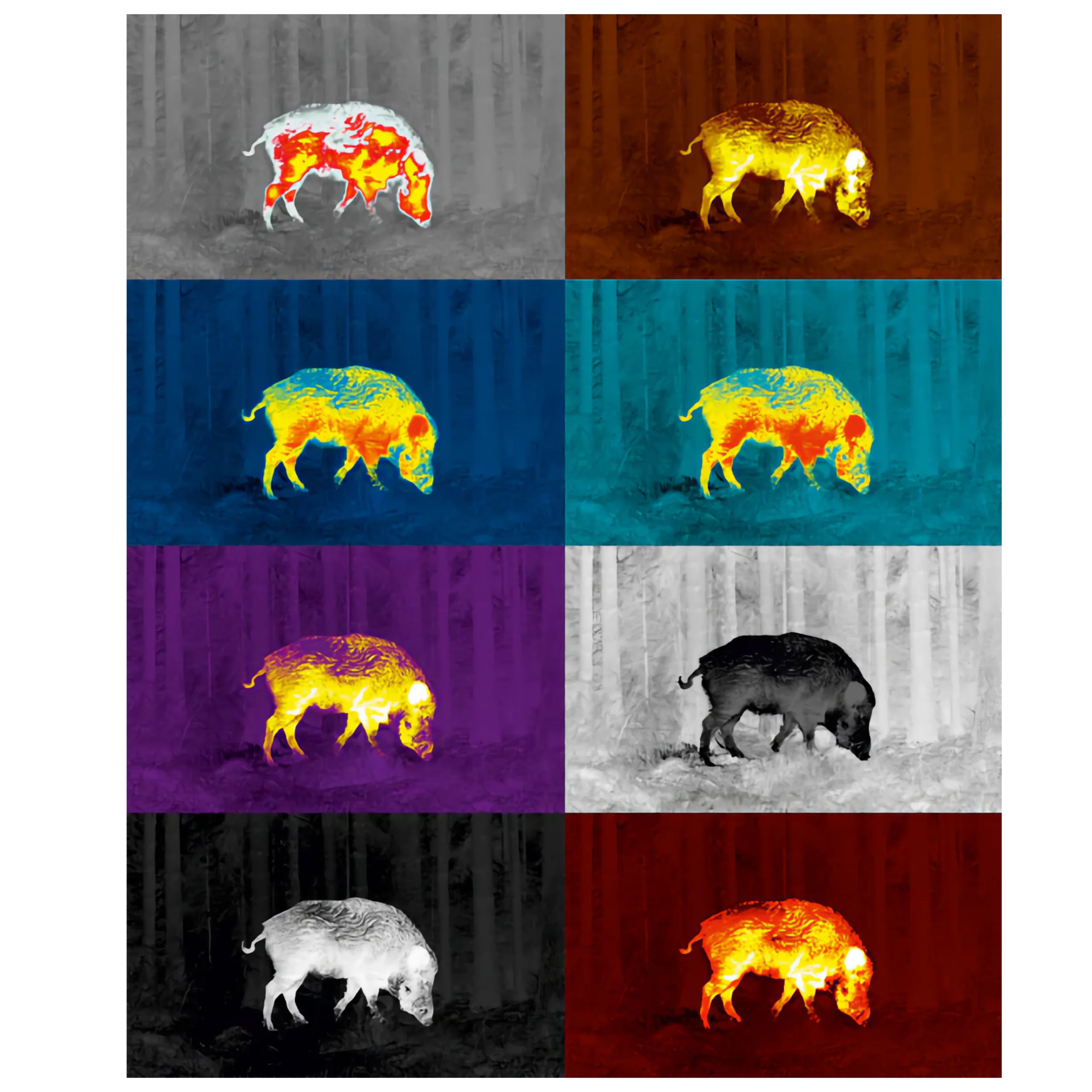
Thermal Color Palettes
Thermal-Imaging Optics: Appreciating Differences
Meanwhile, the sensors used by thermal-imaging optics don’t rely on light at all. While we may generally think of these devices as detecting “heat,” what they can actually perceive are the differences in infrared radiation that are present anywhere there’s a temperature differential. This information is converted into an electrical signal that can be displayed on a monitor, with different radiation levels being shown as different colors.
I’ve encountered a common misconception that thermals are useless during the daylight hours, but anyone who has glanced through one for even a second while the sun was out understands that this is fake news. While the contrast is considerably less stark during the daytime, temperature differentials are still present everywhere, with metal shining as brightly during the day as flesh does at night.
Thermal resolution, even at the entry-level end of the price spectrum, has come a long way since my early experiences with these devices. What were once bright smudges of color are now resolved into clearly defined shapes.
I was amazed on my most recent hog hunt (during which I used the excellent Pulsar Thermion XL60) just how clearly I was able to make out fine details on the hogs that I was targeting from approximately 110 yards. I could even count the points on a pair of white-tailed bucks that wandered by the blind that night.
Most thermal-imaging optics provide users with numerous color-palette options from which to choose that can greatly alter the experience. In my opinion, all color palettes are not created equal, and a thermal using the wrong color scheme can be a bit disorienting, so be sure to try out all your options to find what suits your needs and preferences best.
For instance, in my experience, black hot (in which the heat-generating targets are rendered black but the majority of the surrounding environment is shown in varying shades of white and gray) offers a relatively good view of your surroundings but can quickly become tiring for your eyes. On the other hand, color choices that keep most of your field of view dark provide less situational awareness but are slower to negatively affect your night vision.
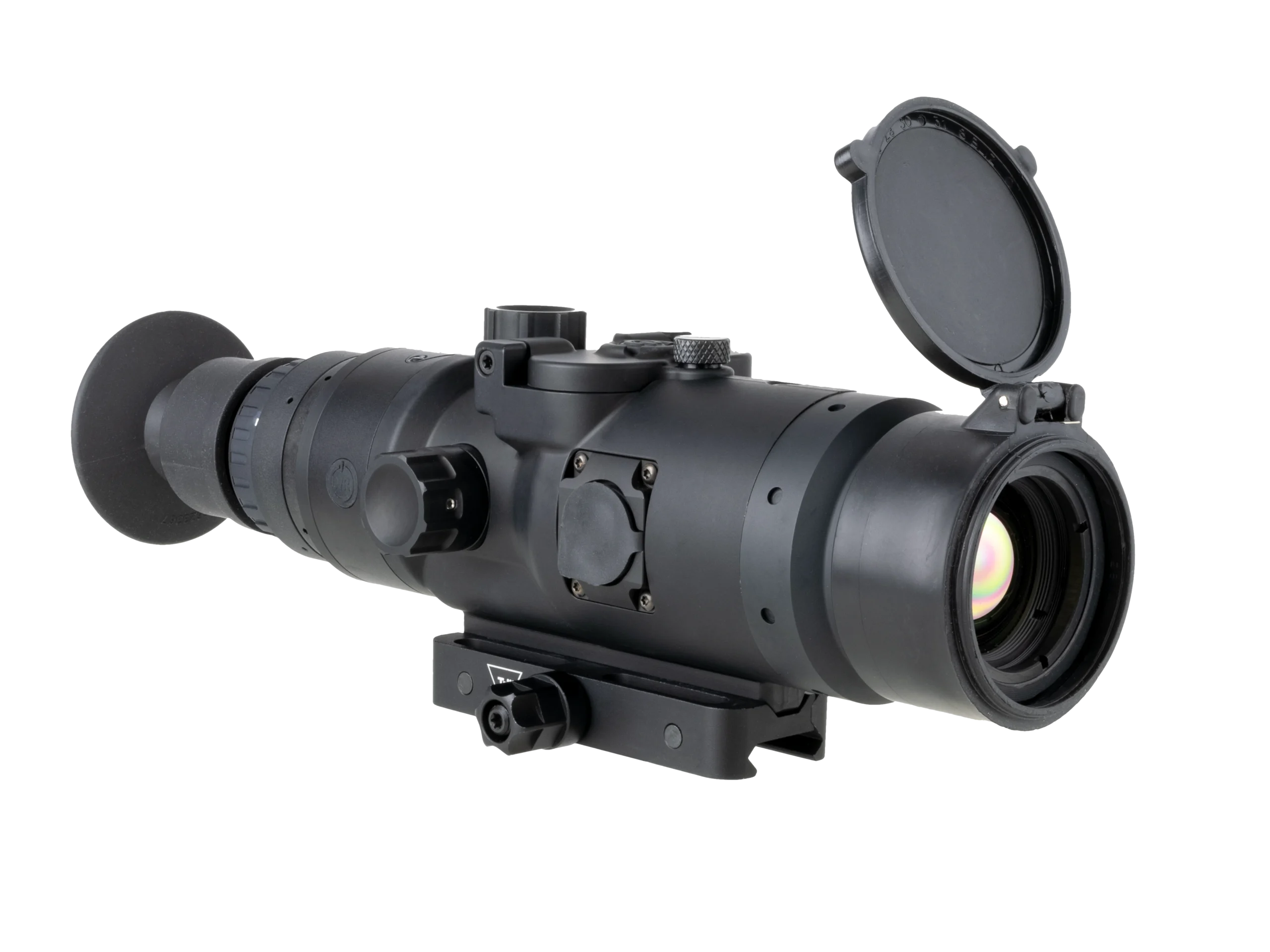
Trijicon IR-Hunter
The Pros and the Cons
In my experience, modern digital night-vision devices can provide a much more detailed, easy-to-understand picture of a hunter’s surroundings than a thermal. And this image-quality discrepancy is even greater during the daylight hours, so if you want to be able to use your optic 24/7, this strongly skews the night-vision versus thermal argument in favor of a quality DNV.
Yet while night-vision may allow you to see everything more clearly, including the log you may need to step over — which makes it the better option if you will be moving around after dark — thermal allows you to see game and other living creatures much more clearly. Between their natural camouflage and inborn predilection for stealth, animals are pros at hiding in plain sight. And while a stationary animal may not be immediately apparent to a glassing hunter using a traditional or night-vision optic, they still glow like a tie-dyed beacon through a thermal.
DNV and thermal optics are equally able to pierce shadows. However, due to their ability to absorb light, the presence of fog and smoke can confuse night-vision — while a thermal cuts through those environmental variables quite effectively. Conversely, as long as there’s light to detect, night-vision can see through clear glass with no trouble, while to a thermal it might as well be an opaque brick wall. And, obviously, thermal is the superior choice when recovering downed animals after the sun has set, as the temperature differential is still enough to make your animal glow brightly even several hours after it has expired.
As a general rule, night-vision devices are usually less expensive than thermal-imaging ones. Although, of course, there is more than enough overlap between the two markets that bleeding-edge night-vision units can cost significantly more than entry-level thermals.
Depending on your budget and the type of hunting you’re doing, a viable option for night hunters can be to run a riflescope of one type on your gun while supplementing it with a lightweight handheld monocular of the other. Naturally, this comes at the expense of added weight and a second optic to keep track of. Specifically, if you’re hunting from a blind, using a night-vision monocular to get to and from your blind and a thermal on the rifle while you’re in it makes a lot of sense.
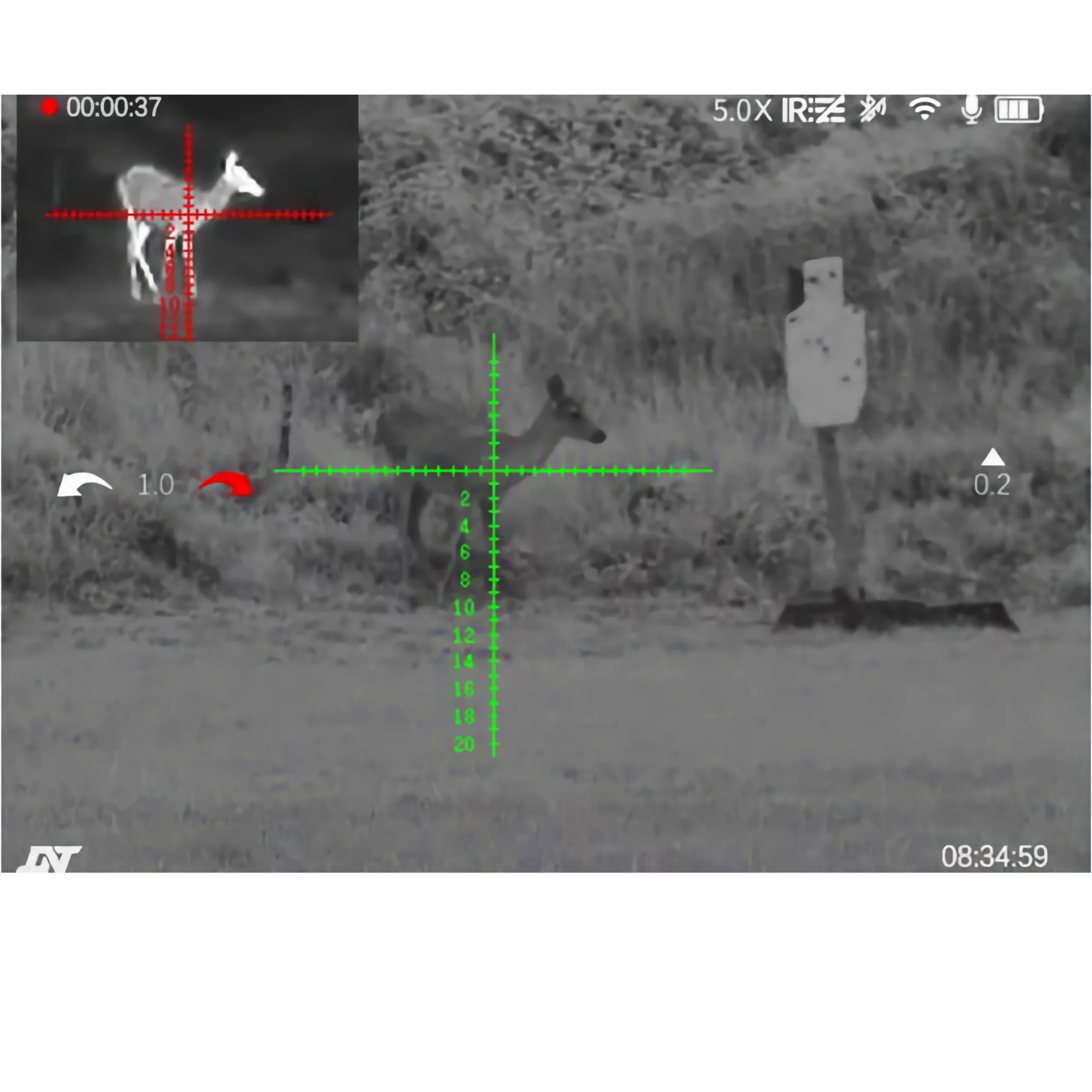
Hybrid Models
Birds of a Feather
Despite their differences, practically speaking, night-vision and thermal optics often make use of similar user interfaces, so once you’ve gotten the hang of using one, you’ll likely be able to manage the other as well. Unfortunately for those most accustomed to using a traditional riflescope, navigating an electronic optic can feel more like changing the settings on your microwave than working with a conventional scope.
While not difficult to use per se, high-tech optics like these typically have many functions and only a few buttons with which to access them, so learning the right sequences of short and long button presses is key to making the riflescope behave as you want. Given the darkness, I strongly recommend getting all these operations memorized and sorted out well before you take to the field. This is enough of an issue that Trijicon specifically designed its IR-Hunter family of thermal riflescopes with user-friendly turret controls to greatly simplify menu navigation.
I’m sure exceptions to the rule exist, but zeroing a modern night-vision or thermal riflescope usually involves firing an initial group and then, while keeping the rifle pointed at your initial point of aim, using the optic’s arrow buttons to move the digital crosshairs to the point of impact. Pressing “enter” then saves the new zero. Many optics these days are even capable of storing multiple bullet profiles/zeros in their active memory, allowing a unit to be used across multiple firearms and cartridges with minimal re-zeroing.
While I understand that this might be a bit of an adjustment for hunters who have experience only peering through traditional optics with round glass lenses, I actually find the large rectangular viewfinders used by modern digital scopes to provide an advantage from a situation-awareness perspective. As long as you’re not zoomed in too tightly, a rectangular display allows you to survey a lot of real estate on both sides of your target. This makes it easier to track multiple animals after the initial shot has triggered the squealing pandemonium, greatly increasing the likelihood of swiftly acquiring another target and firing off additional shots before it reaches cover.
A Third Option?
Lastly, as a potentially best-of-both-worlds answer to your night-vision vs. thermal dilemma, there is a small but growing number of optics already on the market that are capable of both. So you wouldn’t be forced to make this difficult choice at all.
Some, like the ThermNight line from DNT Optics, can even present night-vision and thermal information simultaneously to the user via a picture-in-picture display. There aren’t too many hybrid options like this out there for hunters just yet, but here’s hoping that this changes in the near future.
Ultimately, your application and priorities will determine the best tools for the job, and in some cases, the choice between a digital night-vision optic and a thermal-imaging optic may just come down to how much daytime use it will eventually see and how much that versatility matters to you. And, at the end of the day, when you ask yourself which of these high-tech gadgets you truly need, don’t forget that both is a perfectly reasonable answer.