
What’s Your Favorite Deer Rifle?

Red deer seem to flourish in some of the world’s worse weather. SCI Managing Editor John Geiger took this mouthy, free-range stag in a Patagonia rainstorm while hunting out of Tipiliuke Lodge in 2024.
Jack’s Ultimate Deer Rifle: A Practical East Coast Setup
By Jack Orloff, Associate Editor
I grew up hunting whitetails on the East Coast, mostly in Virginia and North Carolina, where you’re just as likely to be set up on the edge of a field as you are to be tucked into the woods in a tree stand or ground blind. Most of my shots have been between 50 and 200 yards.
I want a rifle setup that’s dependable but affordable, since I don’t need a $20,000 rifle for the kind of hunting I do. That’s why I went with the Ruger American Gen II Predator model in .308 Winchester.
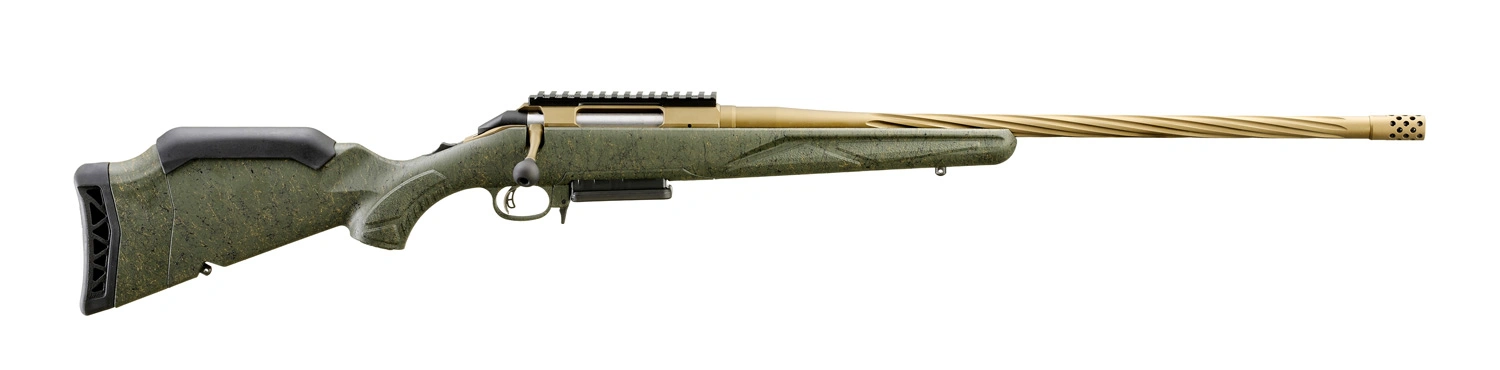
Despite a longer 22-inch barrel, the Ruger American Gen II Predator chambered in .308 Winchester still weighs in at only 6.5 pounds. For short-range deer hunting on the East Coast, it would make for a great rifle option that won’t break the bank.
I chose the .308 because I don’t need a long-range cartridge and because the ammo is readily available. My choice would be a bigger, heavier 180-grain bullet that can deliver 2,700 foot-pounds of energy at the muzzle.
In Virginia, the .308 Win. can handle anything from close-range brush in the woods to longer shots in open soybean or cornfields. Also, if I’ve got a bear tag for North Carolina, the .308 will do the trick if I run into one of those oversized bruins in the northeastern Coastal Plains.
The Ruger American Gen II is a solid rifle, built with a cold hammer-forged barrel and an adjustable trigger. The Predator model’s heavier, threaded barrel works well since I am not hiking long distances, but the rifle itself is still lightweight at just 6.5 pounds.
Its smooth, three-lug bolt action enables quick follow-up shots if needed. The one-piece Picatinny rail is a plus because it will give me one fewer thing to install that can then come loose after I mount the scope.
For optics, I chose the Trijicon Huron 3-9x40mm because it is light and reliable. It weighs 8.4 ounces less than its larger 4-16x50mm counterpart. The 40mm objective lens provides enough light to see clearly during crucial dawn and dusk hours when deer are moving.
The scope’s durability means it will hold zero and stand up to the bumps and jolts of climbing into a stand or riding in an ATV. I experienced this firsthand on a whitetail hunt in Saskatchewan a few years ago; my Trijicon scope took a beating and still performed when it mattered most. At about $700, it delivers quality without breaking the bank.
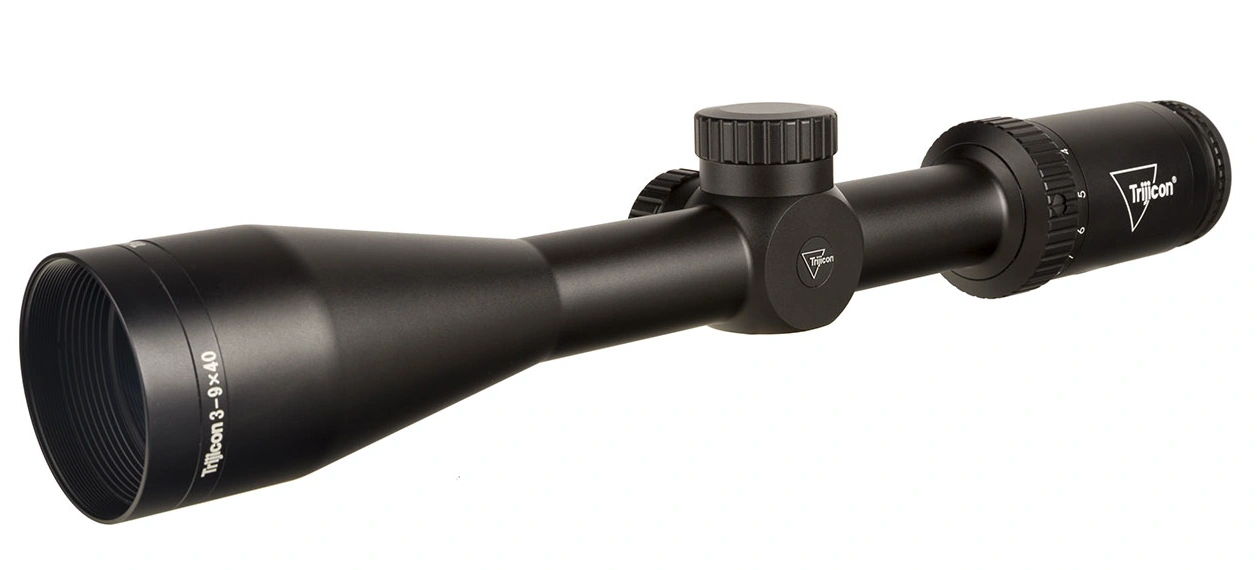
Lightweight and reliable, the 3-9x40mm version of the Trijicon Huron is durable enough to hold zero while standing up to the bumps and jolts of climbing into a stand or riding in an ATV, and its 40mm objective lens provides enough light to see clearly during crucial dawn and dusk hours when deer are moving.
When it comes to ammunition, I’d pick 180-grain Federal Fusion Tipped cartridges because they are effective at close range and still perform well on longer shots in large fields. They are accurate, reliable and easy to find.
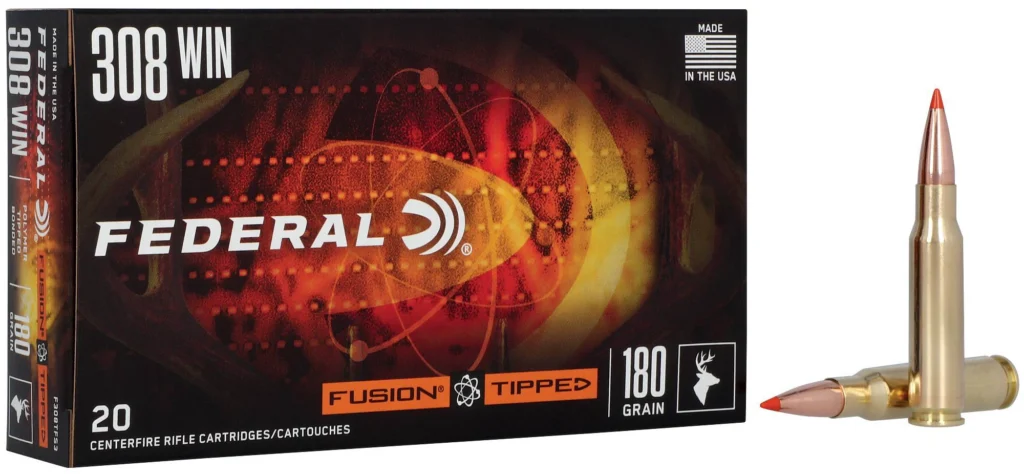
Federal’s 180-grain .308 Fusion Tipped load is readily available, highly effective on deer-size game at close range and yet will still perform well on longer shots across larger fields.
This setup is a combination that is perfect for East Coast whitetail hunting. Whether I’ll be in thick woods or scanning open fields, it stays below budget and will give me the confidence I need in the field.
John’s Ultimate Deer Rifle: Weather Drives Red-Stag Rifle Decision
By John Geiger, Managing Editor
What do the best red-stag hunting areas around the globe have in common? Rain.
The foothills of the Andes in Argentina, the Highlands of Scotland and the Southern Alps of New Zealand (especially the western side) all get plenty of rain. While the red deer might like those conditions, our gear does not.
So, the first thing I’d look for in my ultimate red-deer kit is a guarantee that it will go bang when needed. That’s why I picked my ammo brand first: Hornady Outfitter.
The cases are nickel-plated to resist corrosion, and both the case mouth and primer are covered with a military-grade sealant. You can get drenched, drop your magazine into the River Spey and not think twice.
At about 500 pounds on the hoof, red stags generally aren’t as large as elk but are larger than mule deer and whitetails. For that reason, I’d like the authority of a heavy-for-caliber bullet in .300 Precision Rifle Cartridge.
In the Outfitter line, Hornady loads 190-grain CX bullets. I’d expect 3,000 feet per second at the muzzle with a 24-inch barrel. At 500 yards, it’s still sizzling along at about 2,229 fps with 2,000 foot-pounds of energy. That’s a wallop and penetration that’s hard to beat.
Staying with the weather precedent, I’d pick a Browning X-Bolt 2 Speed. I used this rifle on a red-deer hunt during the rut in Patagonia a few years ago, and I took a mouthy, mature stag in a downpour.
This model has a beautiful bronze Cerakote finish on the barrel and receiver that is known to be better at resisting corrosion than bluing or stainless steel. It seemed like I belly-crawled up every hill in Patagonia to finally get a good shot at a mature, roaring stag. The X-Bolt was as wet and muddy as I was when I finally pushed the safety forward and pulled the trigger.
Yes, it went bang, as advertised, and hit the bull at about 200 yards. The big beast gave up the ghost about 20 yards from where he was hit.
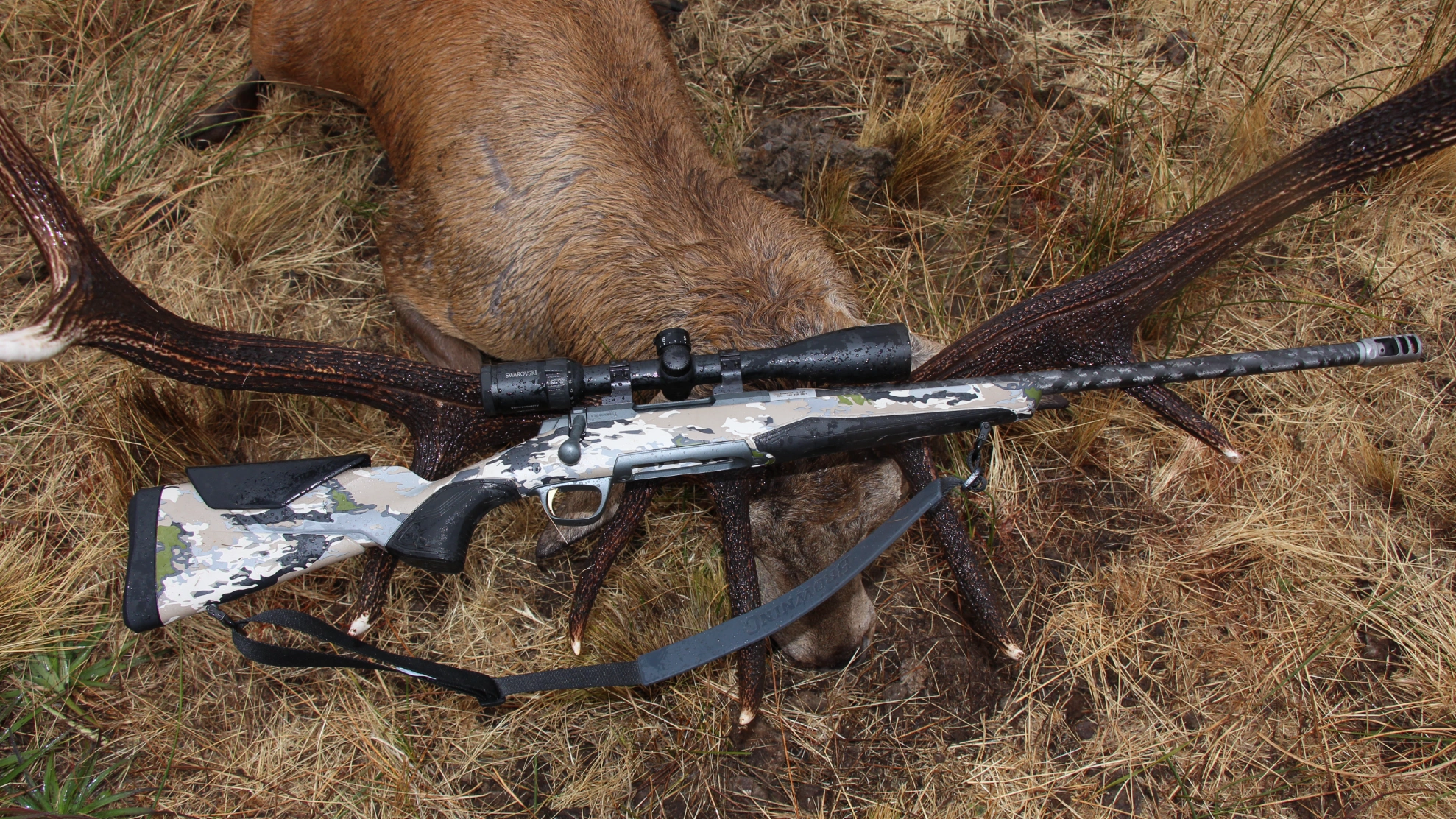
Author John Geiger’s ultimate red-stag setup would include upgrades of gear he used to take a fine, roaring stag in Argentina in 2024. He’d use Hornady Outfitter cartridges in his Browning X-Bolt 2 chambered in .300 Precision Rifle Cartridge with a new Swarovski Z5i+ scope.
In addition to its weather-shedding properties, every X-Bolt I’ve ever shot has been a tack-driver. The rifle has other features that make it attractive, such as an upgraded trigger, bigger bolt handle and a bolt-unlock button that keeps the gun on safe when loading or unloading.
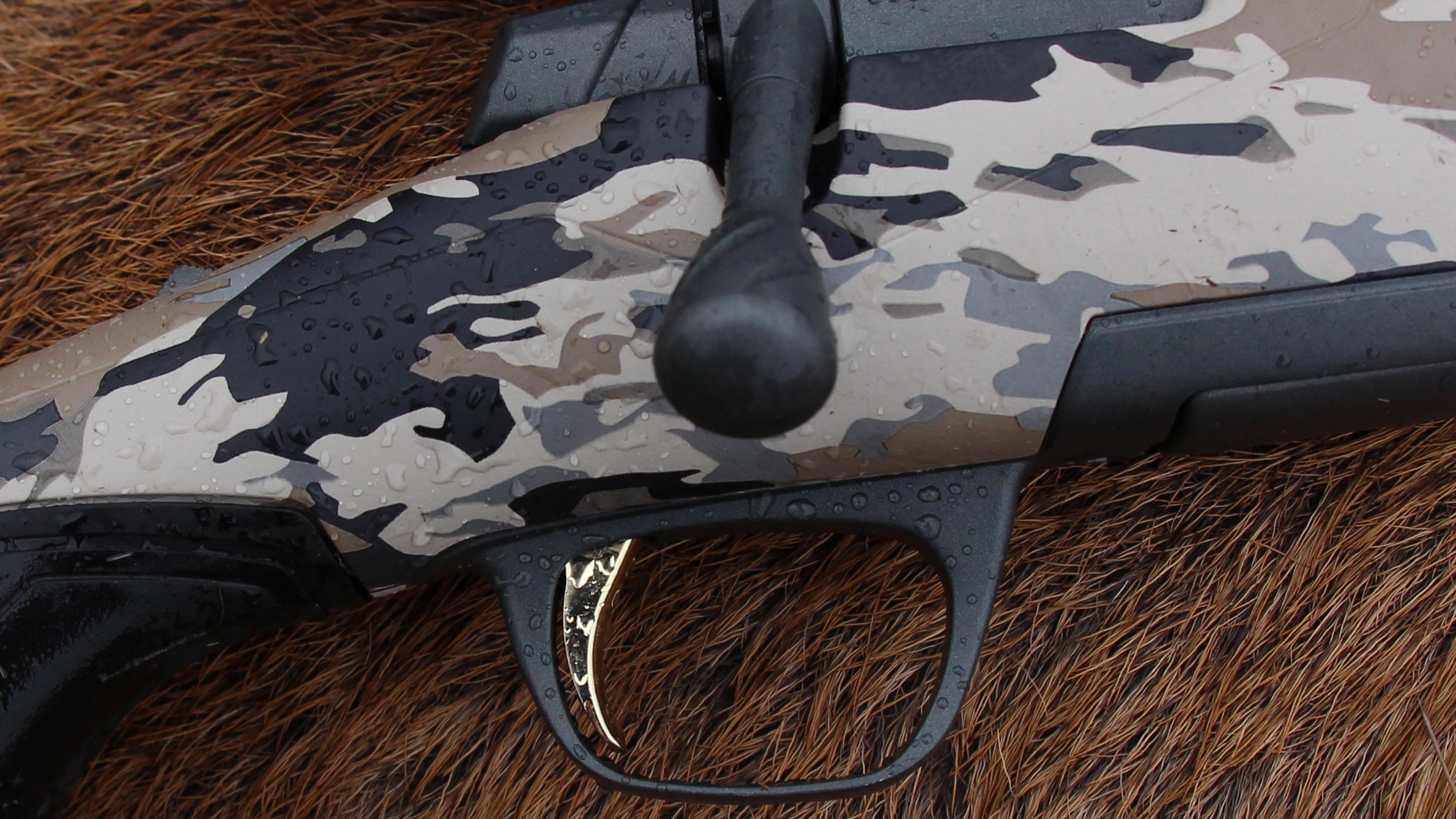
When Browning introduced the X-Bolt 2 in 2024 as an upgrade to the X-Bolt, the company changed out the old Feather trigger for the new DLX. Both are three-level triggers, but the DLX has a flatter shoe surface and a higher pivot point for a cleaner break. It comes from the factory set to 3.5 pounds and is user-adjustable down to 3 pounds.
On top, I want a Swarovski Z5i+ 3.5-18x50mm BT scope that would work with my EL Range 12x42mm — a combination binocular and laser rangefinder. Both feature superior glass that makes you feel like Superman in low-light situations.
Swarovski is the king of lens and external coatings: The company uses a nonstick, nanotechnology, hydrophobic lens coating that reduces surface tension. Water and debris just bead up and slide off.
The next time I settle my reticle on a proper stag, it will probably be raining. Yet I won’t worry about barrel corrosion, a rusty firing pin or fogged-up optics. I’ll be able to focus solely on putting the 190-grain bullet where it needs to go.
Kelly’s Ultimate Deer Rifle: The All-Round All-Star
By Kelly Young, Editor In Chief
While Jack and John tackled their portions of this assignment as hypothetical thought exercises, since I actually undertook the process of selecting the ideal deer-hunting rifle for myself many years ago, my missive will instead be an autobiographical retelling of what I chose back then and why.
The underlying premise for my deer gun was that I wanted it to be as close to an all-rounder as I could make it. I needed the rifle and its cartridge to be equally competent at close and longer range, whether I needed to reach across a Tennessee turnip field or a Colorado canyon.
It would have to be at home in a stand yet light and handy enough for extended stalks. And it must be able to shrug off whatever weather Mother Nature could dish out.
Like most deer hunters, I’m no Rockefeller, so price was a considerable consideration. It didn’t necessarily need to be a budget gun, but I also didn’t want to break the bank on what would be a utilitarian, hard-use firearm. Beauty was not a criterion.
Perhaps most importantly — and certainly most limiting of all — as a proud southpaw, it absolutely had to be built on a left-handed action. Unfortunately, this eliminated most of the rifle market right off the bat. As you can imagine, the months of deliberations were both intense and extremely enjoyable.
I ultimately decided that a left-handed Savage Model 110 Lightweight Storm chambered in 7mm-08 Remington would be the combination that best suited my needs. Unfortunately, despite boasting a catalog at the time that included more than 600 rifle SKUs, such a configuration wasn’t among them — so I had Savage’s underrated Special Order Shop build me one.
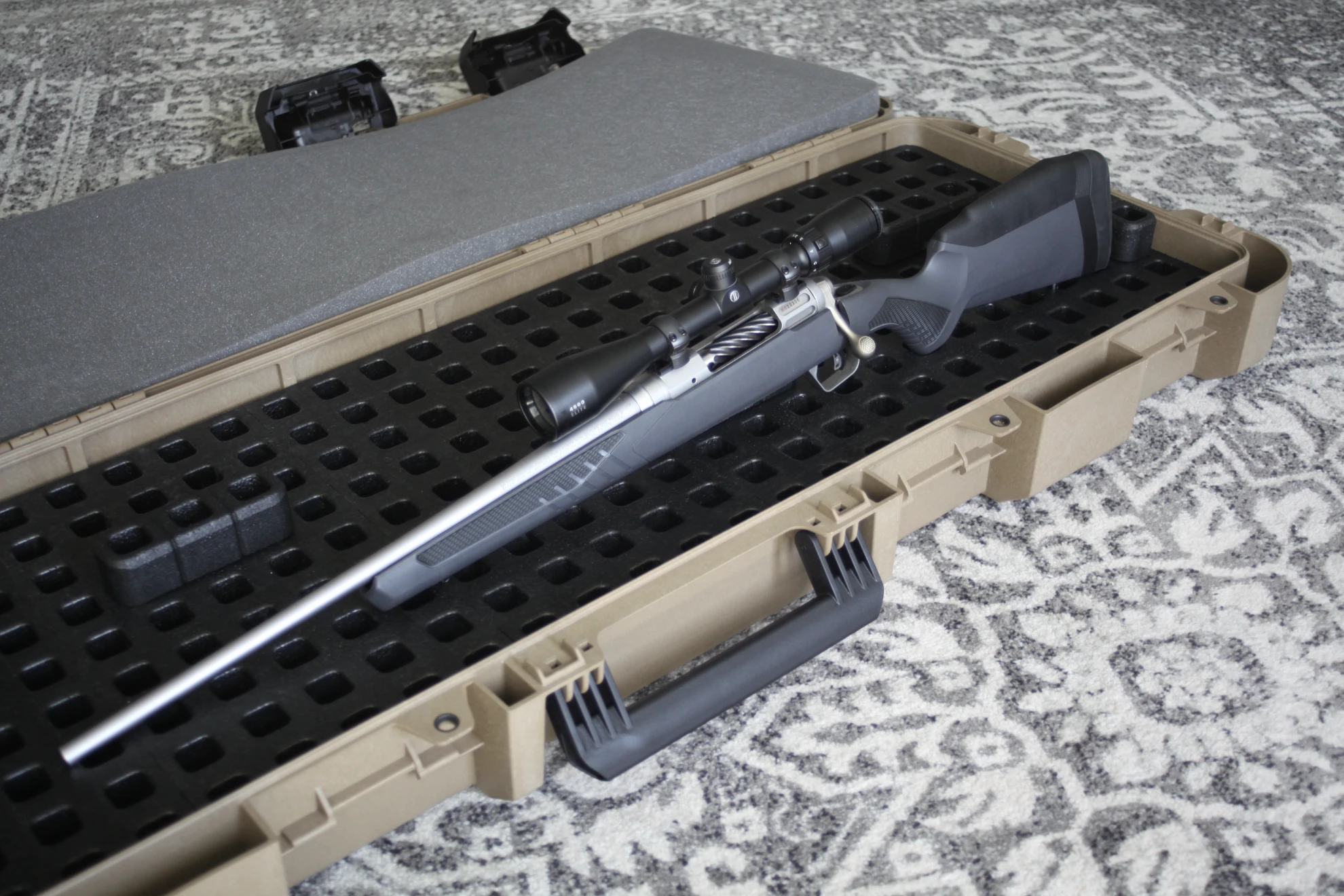
When Author Kelly Young set out years ago to acquire the ideal all-round deer rifle, he decided it needed to be chambered in 7mm-08 Remington, with a lightweight stainless-steel barrel and receiver and a left-handed action. When he couldn’t find exactly what he wanted on the market, he had Savage’s Special Order Shop build it for him.
In 2026, we have an embarrassment of really good deer-hunting cartridges — both new and old. I selected the 7mm-08 Rem. a decade ago for my personal gun because I had always appreciated its blend of accuracy, controllability, external ballistics and terminal performance.
Most loads offer flatter trajectories and less recoil than comparable .308 Winchester ammunition — while still having more than enough kinetic energy on tap for any shot within my personal maximum ethical range. It’s a great, manageable choice for a lightweight rifle.
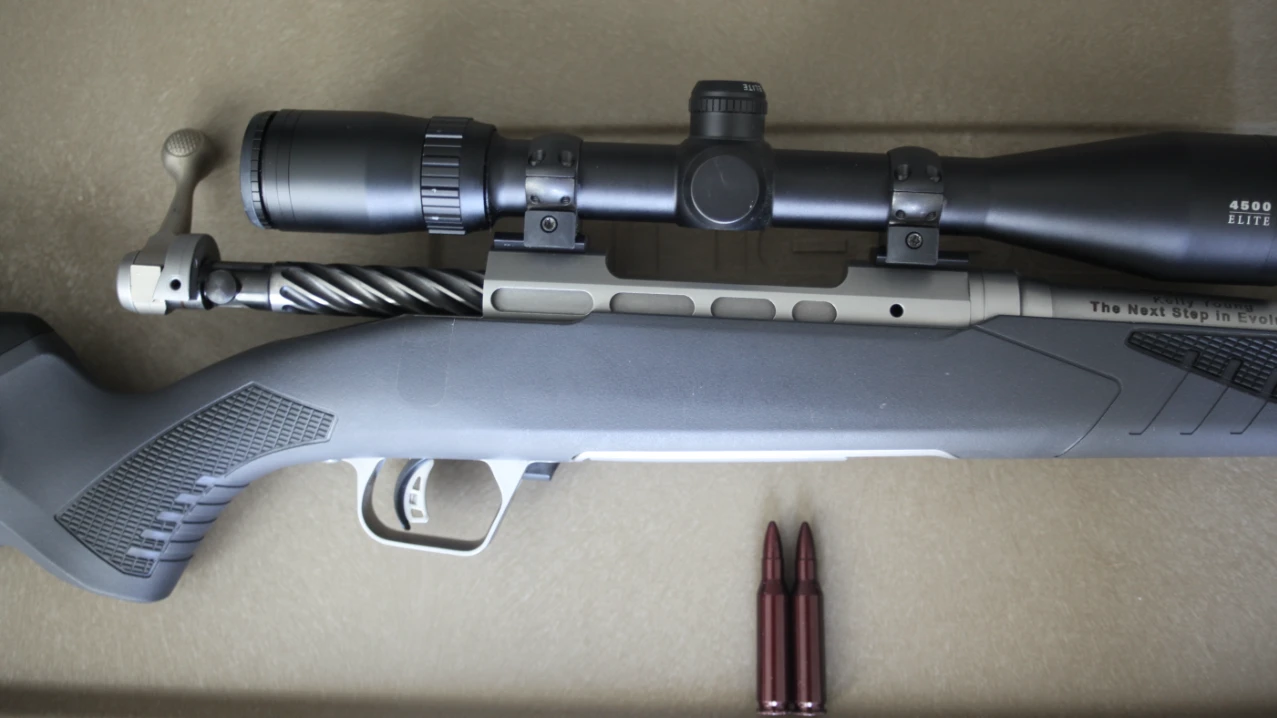
A decade ago, Savage offered a specialized lightened receiver with lightening cuts on some versions of its Model 110 guns, but since no left-hand models that used this receiver were in the company catalog at the time, the author had the company special-made one for his rifle.
I wanted the firearm to perform in any environment, so I went with a stainless-steel barreled action and synthetic furniture for their abilities to shrug off inclement weather. I also gave it an AccuFit stock that allows me to adjust length of pull and comb height with only a screwdriver.
Although I own numerous more expensive optics with which I could upgrade, at the time I put a second-focal-plane 2.5-10x40mm Bushnell Elite 4500 on the rifle, and I have never felt the need to replace it. The lower end of that range is great for situations when a deer surprises me with a spitting-distance opportunity, and I have found 10x to be sufficient for any shot I’m willing to take in the field.
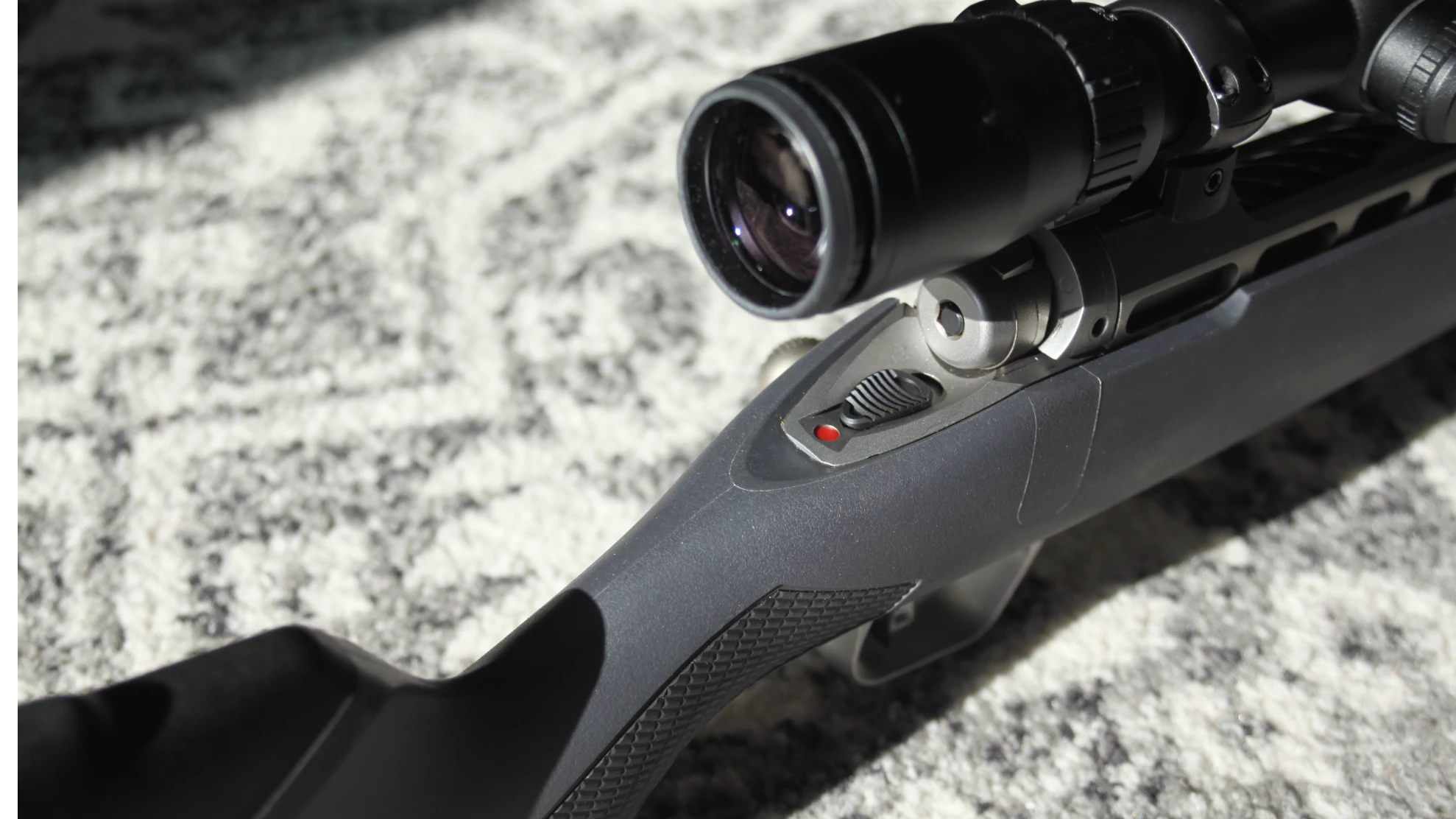
The Savage’s tang-mounted, three-position safety is positioned equally conveniently for both southpaw and northpaw hunters and allows the rifle to be emptied while its trigger remains locked.
My special-order Savage may not be the prettiest girl at the party, but her performance during the years since I picked her out has validated my choices. The rifle is reliable, a pleasure to shoot, effortlessly totable across hard country and shoots minute-of-deer with all loads tested despite its wispy barrel.
Your definition of “the ultimate deer rifle” may vary, but she’s close enough to perfect for me.