
One Rifle, One Bullet, One Knife

Author John Geiger spends a cold November morning in his happy place: against an oak tree, near a saddle on a ridge not far from his home in Northwest Georgia.
Modern technology can certainly help a hunter in the field, but don’t let it detract from why you’re there in the first place.
By John Geiger, Managing Editor
I love tapping into technology while hunting. Tools like onX Maps, Hornady’s ballistic app and Revic’s Radikl Smart Scope are like a second brain and give me a big advantage in the field. Lord knows I might not turkey hunt at all in the spring if it weren’t for those clever Thermacell mosquito-repelling devices.
But sometimes I make a point to leave the gadgets behind and get back to what I originally loved about hunting.
Technology can make us more effective, but it can’t produce a profound appreciation of nature in someone. Nor can it serve as a substitute for showing up for a fellow hunter in their time of need. And technology does nothing to add to the experience of simply sitting quietly in the woods. For a moment like that, all you truly need is a rifle, ammo and a knife.
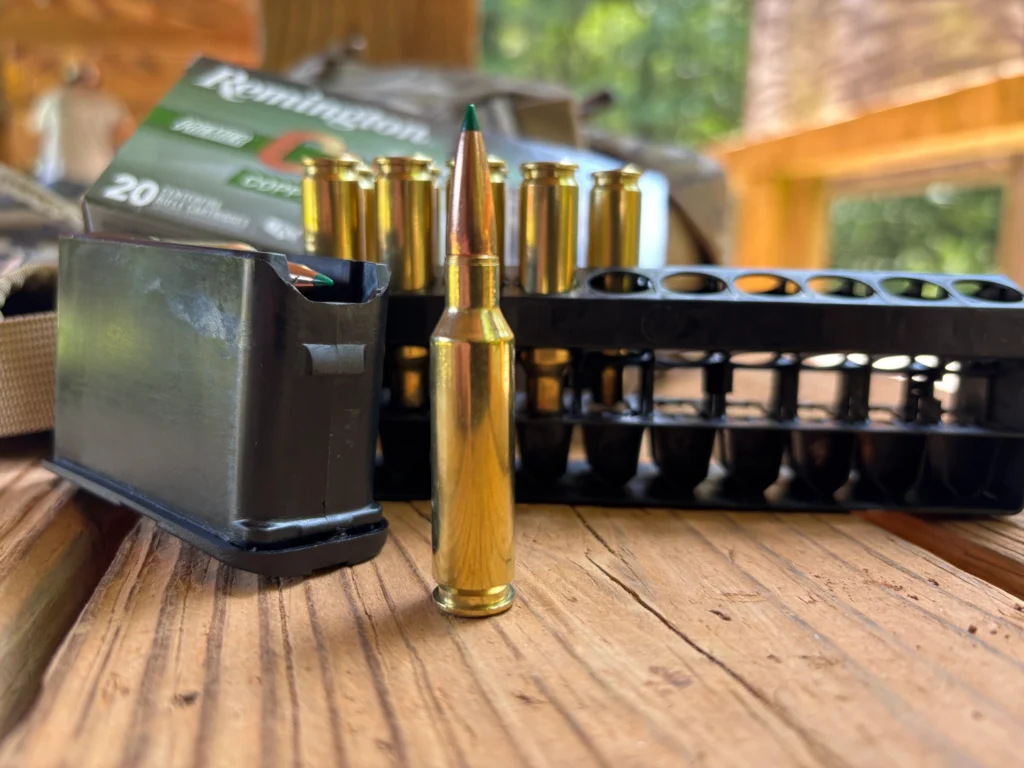
There’s nothing fancy about taking only a rifle, ammo and a knife deer hunting and leaving a lot of technology at home. Remington Core-Lokt, called “the deadliest mushroom in the woods,” is a basic load that performs as it should.
What made you fall in love with hunting in the first place? It’s worth taking a few minutes to think about. Chances are that it had nothing to do with the technology mentioned above.
For me, three things sparked my passion for hunting:
First off, I’ll never forget holding my first mallard drake and seeing how function and beauty could be one. The awkward orange feet, the curious, curly cul de canard feathers around its oil duct and the magical, iridescent speculum mesmerized me.
Secondly, I remember setting a heavy plate of backstraps on my family’s kitchen table, knowing they were staring at their future favorite meal.
And lastly, but perhaps most importantly, further back, I recall the efforts of my first mentor — who was intentionally fanning the desire. After a morning of quail and pheasant hunting, dad would make a late breakfast right there in the field. As our English pointer lapped up water, Pa fed the fire to fry eggs and bacon. They looked terrible, nothing like mom’s, but tasted wonderful.
Before the days of Nalgene and YETI, dad would use an empty Johnnie Walker Red Label bottle to carry our water. After trudging through muddy cornfields and pushing through heaps of briars, the liquid looked wonderful but tasted terrible. Dad swore he’d washed out all the liquor; he did his best, but it still tasted rancid to the 12-year-old hunter.
Years later, when dad couldn’t walk the fields anymore because of age, or swing his Fox 12-gauge as he once had, we’d laugh about the Scotch-flavored water and all the other experiences we shared in the fields, marsh and woods.
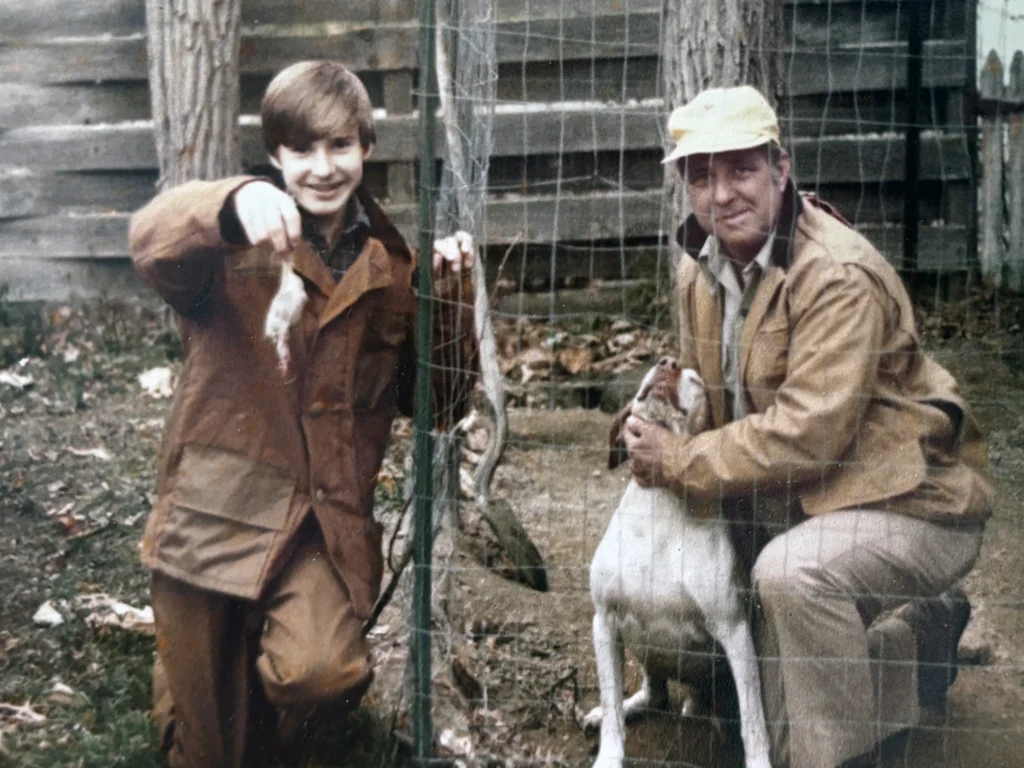
There were no iPhones or Instagram back in the early 1980s, when this photo of author John Geiger, his father, Jack, and their English pointer, Mike, was taken.
None of those memories depended on better gear. The mallard, meat and fried eggs were not about getting a limit, posting a photo of a long-tailed pheasant on social media or making a 500-yard, computer-assisted shot on a deer in the next county.
No, these memories have lasting value because they are gifts wrapped in my relationships with others and nature. They are rooted in the core of human existence: fire, community meals and hunting.

Game meat is a gateway drug into the world of hunting.
In an essay published last year, author Stephen L. Eliason claims technology is having a negative impact on the hunting experience.
“Some of these new advancements and practices threaten the hunting heritage by giving hunters an unfair advantage and undermining the concept of fair chase, contributing to the depletion of wildlife populations on public land, and suggesting that costly accessories are necessary for a good hunting experience,” Eliason wrote in the journal Wildlife Letters.
His contention may be true in places, but it isn’t representative of our hunting culture.
Let me unequivocally note that if a photo of a dandy buck pops on my trail-cam app, or deer season is coming to a close and my tags are not filled, I’ll grab a climber and strap on as much technology as I can to give me any edge possible against wily wild animals.
I can appreciate nature, respect fair chase and follow regulations, all while using technology. I can also chew gum and walk at the same time. I bet most other hunters can, too.
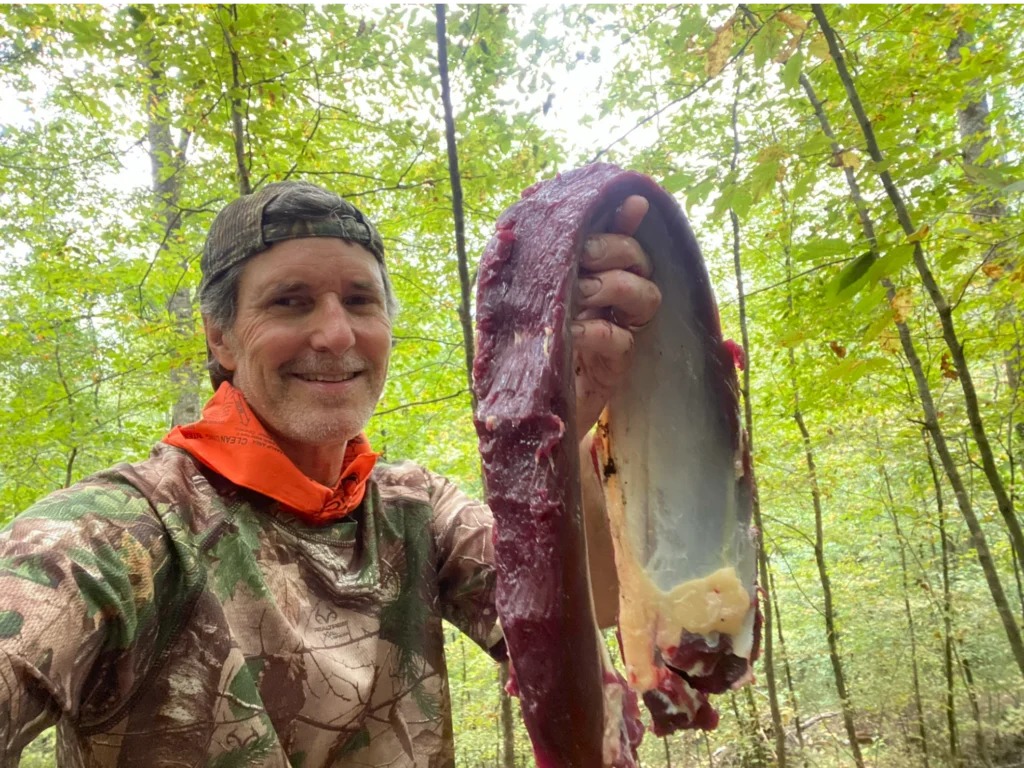
Hunting with the assistance of technology can give you an advantage compared to simply carrying a rifle, some ammunition and a knife, but the old-fashioned methods can yield success as well – and can offer something more.
Still, I take at least a few days each season to get back to the basics. A rifle, a few rounds of ammunition and a knife are all I really need.
On those days, I’ll hunt the way a solitary Cherokee might have 200 years ago in these parts. I’ll find a wide oak tree (with no poison ivy vines or copperheads at its base), sit down, lay the rifle across my lap and stay still.
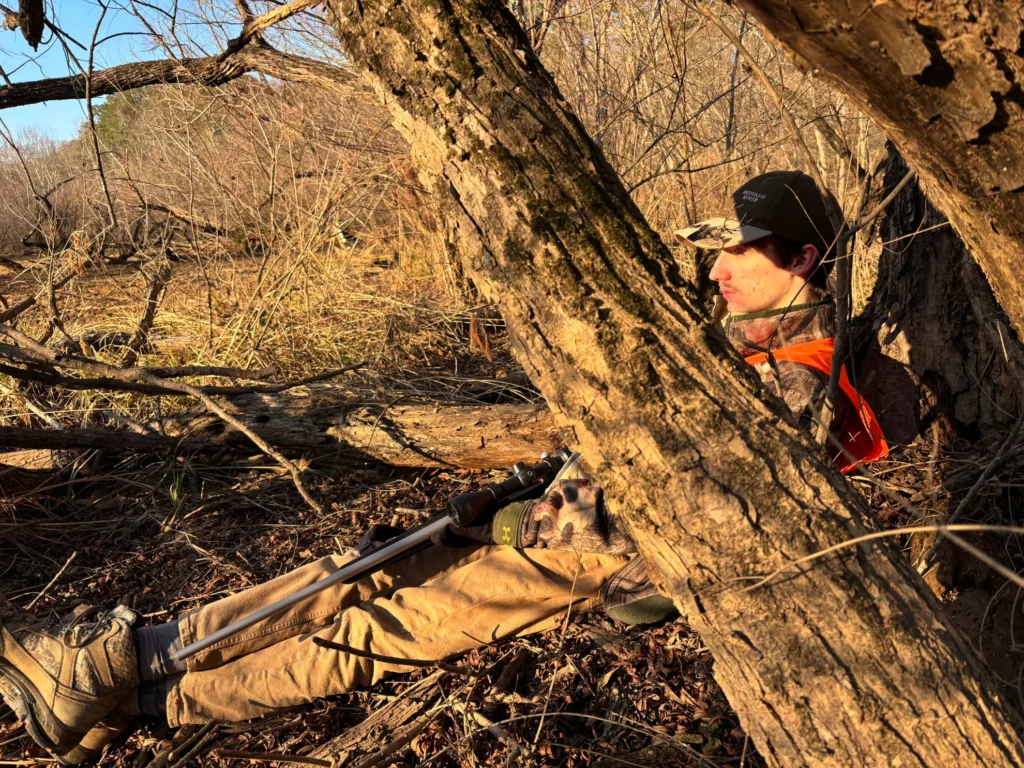
Like father, like son, Andrew Geiger also hunts in tree stands but occasionally still hunts deer the old-fashioned way.
There’s less pressure to kill a deer and more time to watch, think and learn from the forest and its critters. Once, a flock of 30 turkeys surrounded me, scratching at the leaf litter, making purrs and whines. I could have touched one. Lost in thought, I’ve had squirrels run across my lap.
Small groups of wary Carolina chickadees, tufted titmice and nuthatches have flown around me as if I were not there. I always wondered how such delicate, defenseless creatures could survive in an environment where nearly every other animal wants to eat them.
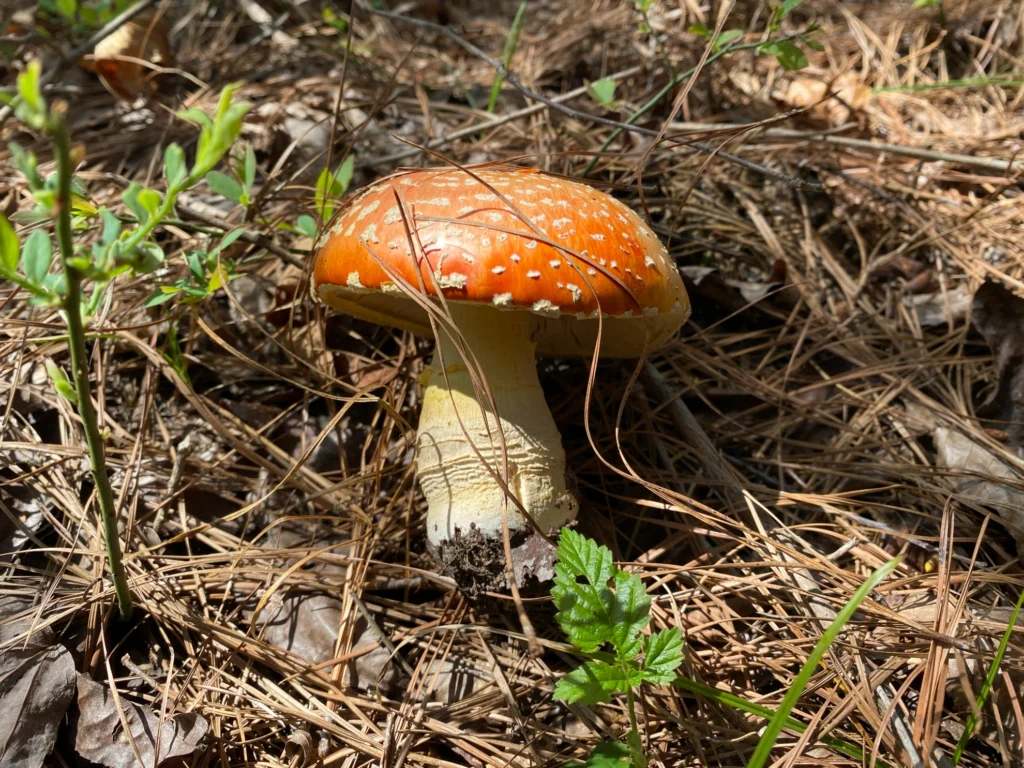
Sitting on the forest floor gives you a different perspective. I would not have seen this beautiful, but poisonous, fly agaric mushroom if I were in a tree stand or shooting house.
Aldo Leopold’s A Sand County Almanac is a masterclass on appreciating the profound world that is nature and our relationship to it.
“Our ability to perceive quality in nature begins, as in art, with the pretty,” Leopold wrote in the 1940s. “It expands through successive stages of the beautiful to values as yet uncaptured by language.”

Pick your spot. There is plenty of public land in many states across the country.
You’ll never get past pretty if you’re watching YouTube videos on how to kill a big buck.
Empty your pockets. Carry the bare minimum a few times each season. Remember what – and who – first lit the fire of hunting in your heart.