
Sonora’s Ghost

Author Jack Orloff admires the Coues deer he took using the Benelli Lupo in 6.5 PRC.
The Benelli Lupo proves itself as a trusted companion on a Coues quest
By Jack Orloff
I had just started to rest my eyes in the warmth of the Sonoran afternoon sun when my guide, Richard Paun of Tall Tine Outfitters, suddenly said the words I’d been waiting for: “There’s a buck across the canyon.”
I instantly sat up. I was on full alert.
“Where is he?” I said, as I scanned the rocky hills.
“He’s across the canyon behind some mesquite,” said Richard. “If you follow that big boulder down to the drainage, you should be able to see him.”
I followed Richard’s directions, and there he was. A Coues buck basking in the sun across the canyon.
“He’s a good deer, and you have my permission to take him if you want,” Richard said in a calm manner.
I picked up the Steiner Predator 10×42 laser rangefinding binoculars and ranged the deer at 430 yards.
There was no way to get closer without being detected. I looked around for a good place to set up for the long shot. My options were limited because we were sitting on the side of a hill angled downward on a 25-degree slope.
“This might be uncomfortable,” I thought as I tried to quietly clear some brush around me so I could rest the Benelli Lupo in 6.5 PRC on my pack as I went into the prone position.
I kept scooting around, trying to find any position that wouldn’t feel like my neck and back were about to break.
Finally, I got somewhat settled and dialed the Steiner ePredator 8 3-24×50 rifle scope. I looked into the lens and turned the turret until it said 430 yards in the heads-up display. I centered the crosshairs on the buck’s vitals.
Richard took his eyes from his spotting scope for a second to help me move a few sticks and rocks that were wedged underneath me. By the time we both looked back to where the buck had been, he was nowhere to be found.
Had I just missed the opportunity that I had traveled all this way for?
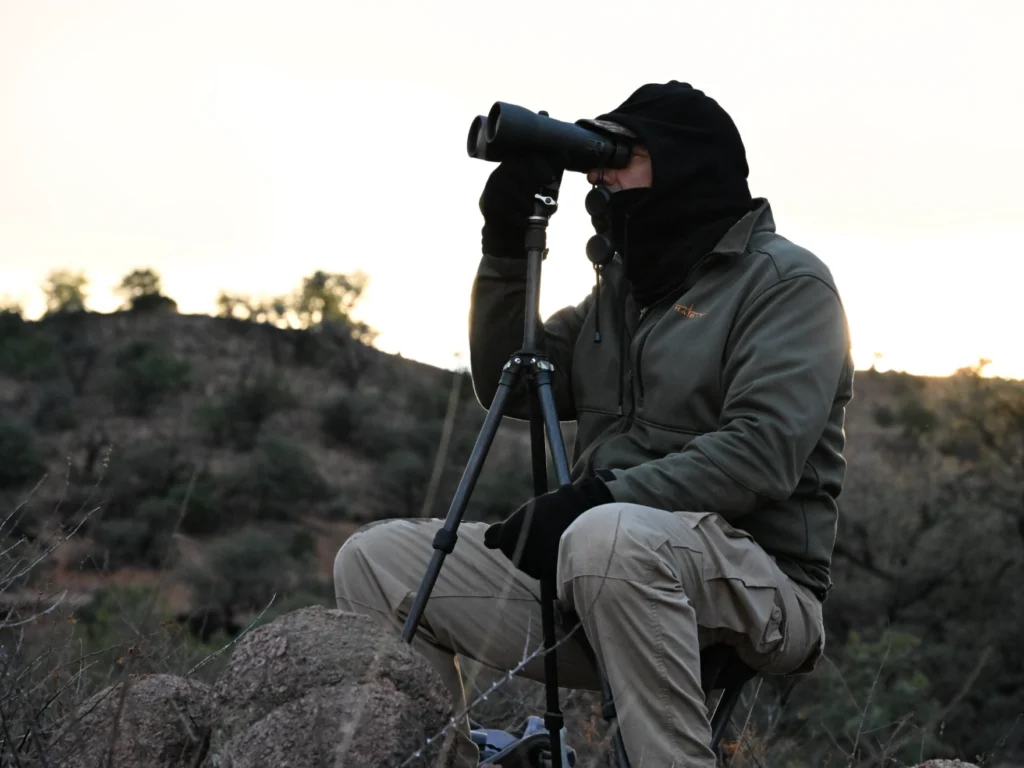
It was January 2026, and I was hunting Coues deer in the Sierra Madre mountains of Sonora, Mexico, with Tall Tine Outfitters, run by Ted Jaycox.
Coues deer, a small subspecies of white-tailed deer, typically weigh less than 110 pounds. They are hunted in the deserts and mountains of the U.S. Southwest and Sonora, Mexico. Some call them “gray ghosts” because they seem to disappear into the brushy, rocky terrain, thanks to their grayish-brown coats and small size.
Jaycox launched his Mexican operation after meeting Alice and Roberto Valenzuela at an SCI Convention.
In 2001, Jaycox had a TV show, and he went to the SCI Convention to set up hunts. He met Alice and her late husband Roberto, who owned Rancho Mababi in Sonora. They offered hunts for Gould’s turkey and Coues deer.
The following year, Jaycox traveled to Mexico, enjoyed a memorable Gould’s hunt and developed a friendship with Alice and Roberto. Jaycox began taking turkey hunters to Rancho Mababi in 2013 and then Coues hunters the next year. They’ve worked together ever since.
With about 28,000 acres, the ranch features a diverse landscape, with high mountains, desert stretches, water features and more.
The nostalgia is unmatched. Adobe buildings, constructed in the early 1900s and converted to living quarters in the 1950s and ’60s, make you feel as though you’ve stepped back in time.
The ranch stands out, and the deer here are just as extraordinary.
“If you have hunted Coues deer in Arizona, you’re typically happy to shoot a 75- or 80-inch deer,” said Jaycox. “We like to start our bucks here around 100 inches or more.”
“If it’s a first-time hunter who’s never been here, and we have an old, mature deer — which is what we target — and he’s 95 inches, that’s perfectly acceptable to me,” he said. “But we have killed some incredible deer here, up to 135 and 136 inches, so that gives you some idea of the quality of bucks.”
To put that in perspective, the SCI Record Book minimum in the rifle category for a typical free-range Coues buck is 80 inches. For a non-typical free-range buck, it’s 98 inches.
Darrin Collins holds the record for the largest typical free-range Coues deer in Mexico. He took a 143 4/8-inch buck in 2010 in Sonora.
The overall No. 1 in the category is Ed Stockwell’s 149 4/8-inch buck taken in 1953 in Pima County, Arizona.
Of the top 10 in the category, seven were taken in Mexico.
The hunting approach here is suited to the sweeping landscape that stretches out in every direction.
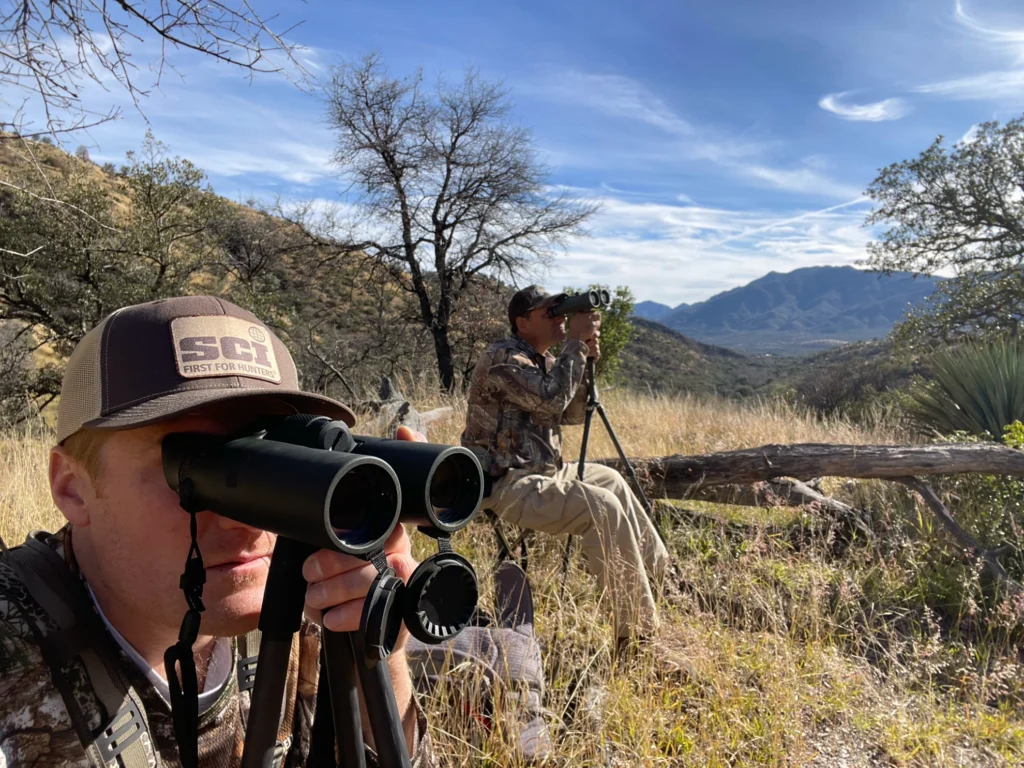
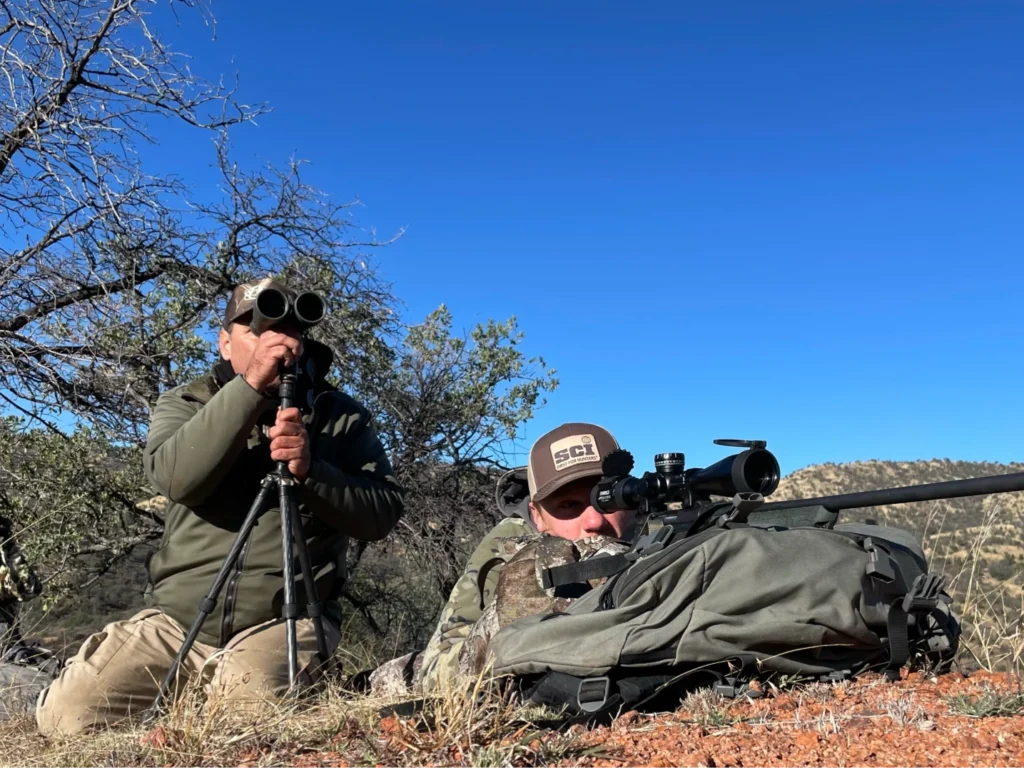
“Our style of hunting involves a lot of glassing,” said Jaycox. “We’re on the ridges at daylight and stay there until the deer are gone. Sometimes we can shoot from our initial glassing position; other times, we have to make a stalk. But we have a great system of roads on the ranch, so it’s very doable for hunters with all different physical capabilities.”
We had arrived in Mexico a few days early after a smooth crossing from Douglas, Arizona, to its sister city of Agua Prieta, Mexico. The final leg of the journey was a 2-hour drive to the ranch.
When we arrived at Rancho Mababi, we confirmed zero at the range. The other three hunters and I were each paired with a guide, and we all headed out for an afternoon hunt.
As we drove up through the hills, around every bend, a new view unfolded. The landscape’s beauty was incredible, and I felt as if I were standing in one of the world’s last truly untouched places.
Although conditions were good for hunting that afternoon, we never spotted a deer.
The next day, we awoke to a steady drizzle that did not let up for the entire day.
Deer sightings were scarce, and we were soaked. It was getting late in the afternoon, so Richard decided we should head back to camp.
As we drove back down the mountain on the bumpy, rocky roads, out of the corner of my eye, I saw a flash of white darting up the mountainside about 60 yards away.
“There’s one, and I think it’s a buck,” I said.
We stopped and got out of the vehicle. I placed the Spartan Springbok tripod in a good position for a shot, but the gray ghost was gone.
Later, we enjoyed a wonderful stew cooked by Alice, chatted for a bit and then hit the hay, excited for what the next day could bring.
Day 3 was windy and cold. We spent hours glassing one hill, then would move to the next, repeating the process every few hours.
Spotting these tiny deer proved to be a true test of patience. Their size, combined with their gray and brown coats, allows them to perfectly blend into the landscape. They are nearly invisible.
Sometimes I’d be staring right at a deer and didn’t know it. The rugged terrain only adds to the difficulty, but it also makes each sighting a small victory.
We spotted a decent number of deer that day. None were shooter bucks.
On Day 4, Richard decided we should hike up to a glassing point the guides had named “Imagination.”
It was a cool and calm morning, perfect conditions for hunting these elusive animals.
After glassing for about an hour and being blessed with a beautiful rainbow as the sun was just peeking over the golden rocky hills, we heard a shot from way across the canyon.
Then, about 20 minutes later, another shot.
Radio contact confirmed that fellow hunters Brad Fenson and Darron McDougal had taken two nice bucks, both at extended distances. Brad’s was a 534-yard poke, and Darron dropped his at 400 yards.
Richard decided we should hike just across the way to glass another hillside.
After a few more hours of glassing, we had not seen any more deer. It was midafternoon, siesta time, and I began to doze off.
That’s when Richard spotted the buck across the canyon.
Since we were on a slope, it was difficult to get into a shooting position, and by the time I got ready, the buck was gone.
I beat myself up the rest of the day for not getting a shot off. However, I never want to pull the trigger unless I feel completely comfortable with the shot.
On Day 5, Richard and I set off accompanied by Darron, who had already filled his tag and was now lending his spotting skills. We decided to return to “Imagination.”
We glassed for hours. The wind picked up quickly. Chilly air began piercing through my layers of clothing.
After seeing just a few does milling around the mesquite and junipers below us, things were not looking good as the wind continued to howl.
Then Richard got a radio call from fellow guide Joe Williams, who explained that he had spotted a good buck just on the other side of the canyon. We quickly packed our gear and headed for Joe’s location.
Hustling down and back up the rocky hill, we finally reached Joe, who was sitting next to an oak tree, locked into his spotting scope.
“He’s right there on the side of the hill about 300 yards with two does,” whispered Joe as we all huddled next to him.
There he was. A mature Coues buck hanging out behind some mesquite, watching his does.
Hand motions signaled for me to army crawl to the crest of the hill with Darron as Joe and Richard, just behind us, kept watch on the buck.
The hill was bare and somewhat flat, with no brush to obstruct my view — ideal conditions for setting up a steady prone shot.
Darron placed his pack in front of me so I could rest the Lupo on it for stability.
“Okay, he’s at 311 yards,” Darron whispered while looking through the rangefinding binos.
I dialed the elevation turret to the correct yardage in the scope.
I steadied my breathing. The buck stepped out from behind the brush and provided a clear broadside shot.
“I’m going to take him,” I whispered to the guys behind me.
I took another deep breath and slowly squeezed the trigger.
The Lupo barked, echoing across the hillside.
I quickly tried to relocate the buck in my scope as I chambered another round.
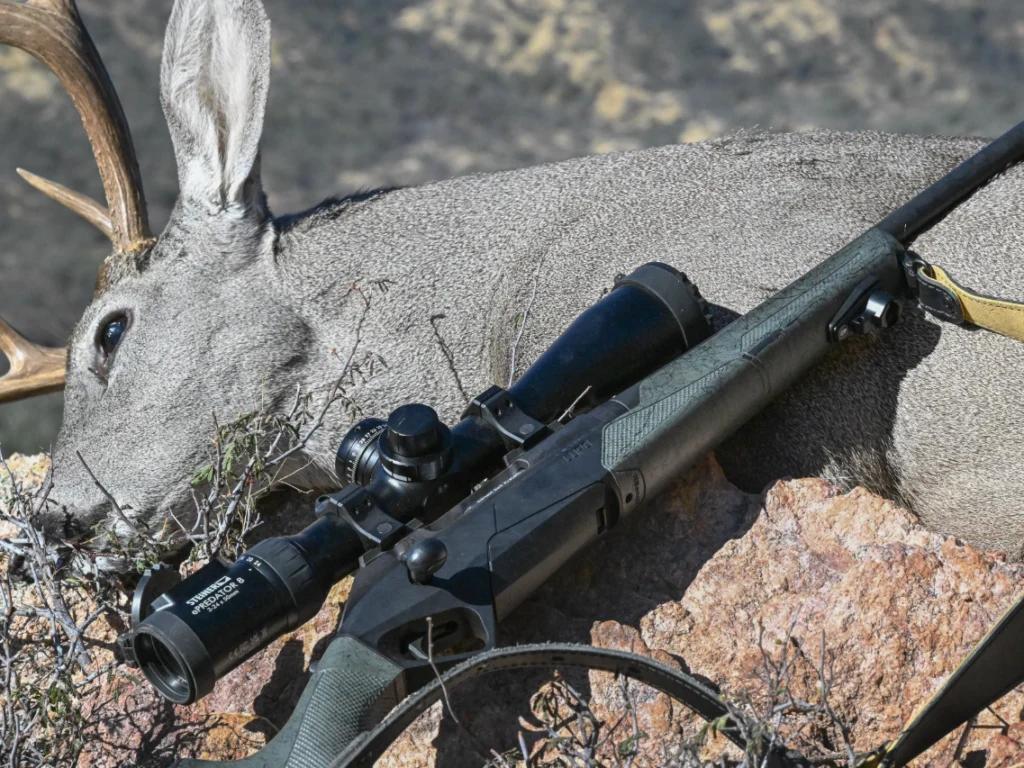
The Benelli Lupo lies resting on the expired Coues buck
“He’s hit,” said Darron.
“You got him, but stay on him,” added Richard.
The buck managed just a few staggering steps before collapsing. From across the canyon, his gray coat glistened in the sunlight.
High fives and hugs followed. We simply sat there for a few minutes, letting the moment sink in.
After arriving to where the buck lay, I was in awe. I had never seen a Coues deer up close. Although it was a good, mature buck, its daintiness was astonishing, unlike any deer I had seen before.
Richard called on the radio to let the cowboys know that we had a buck down, and that we were ready for export.
As soon as Richard put down his radio, a shot rang out in the far distance.
Fellow hunter Tim Joseph had taken his buck, and we were now four for four at camp!
The cowboys arrived on horseback like a scene in an old Western.
They loaded the buck on a saddle and headed back down the hill, a flawless routine that had clearly been performed many times.
As I sat in the guides’ quarters that final night, swapping stories over a cold Tecate, I reflected on this amazing journey.
The pursuit of the elusive Coues deer had tested my patience. But it also rewarded me with unforgettable memories, new friendships and a deep appreciation for the wild beauty of Sonora.
The Rifle
Benelli Lupo
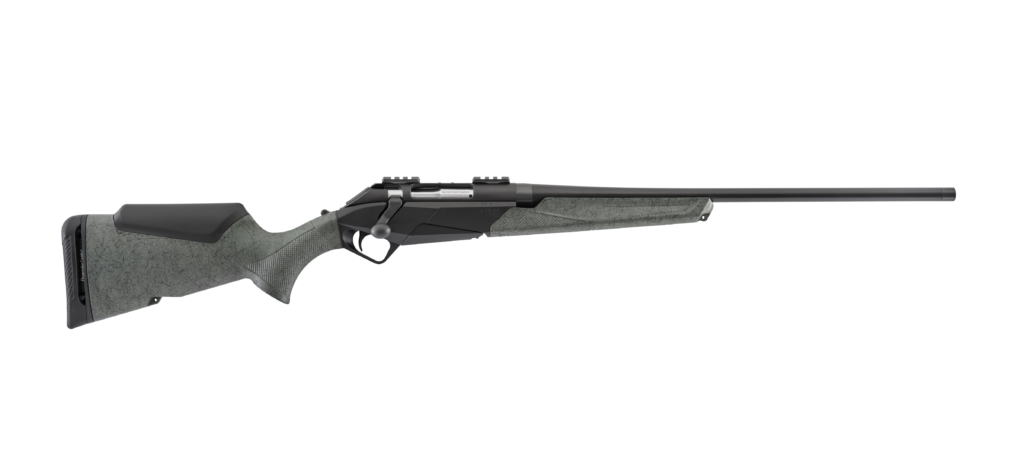
Benelli, long renowned for its exceptional shotguns, has brought that same level of mastery to the rifle world with the Lupo.
The Lupo, which is Italian for “wolf,” isn’t your average bolt-action rifle — it’s built with both precision and comfort in mind.
Right out of the box, the rifle fit me well. But I was able to customize it to my frame with a shim kit for drop, cast and trigger-reach adjustment.
What’s interesting about this rifle is how the barrel is manufactured and treated. The company uses a proprietary three-step process they call “Benelli Accuracy Inside.”
The first step is a vacuum-heat treatment for the barrel blanks to eliminate stress in the steel at the molecular level.
The second is an electrochemical rifling process. This utilizes a stress-free etching process to cut the lands and grooves, resulting in a consistently precise bore.
The third step is what they call “Crio Treatment.” They place the barrel in a freezer at -300 degrees for 24 hours to relieve any remaining stresses. It makes the bore more evenly grained and results in a more uniform, slicker surface.
“This ultimately improves ballistics because of the consistency throughout the bore,” said Bret Maffett, Benelli’s senior product manager. “Any imperfection can impact accuracy and precision, and Crio Treatment refines out those imperfections.”
The Lupo is a chassis-style rifle, which means the barreled receiver is mated to an aluminum chassis to provide shooters a more rigid and stable overall platform.
“This use of a metal chassis allows shooters to fully harness the ballistic potential of our barrels, providing one of the most inherently accurate and precise factory rifles in the world,” said Maffett.
I paired the rifle with 143-grain Norma Bondstrike 6.5 PRC ammunition. The flat-shooting, hard-hitting combination helped my confidence for a long-range shot across open country.
Recoil was surprisingly tame, thanks to the company’s Progressive Comfort system built into the stock.
Benelli offers the Lupo in a variety of finishes. The standout option is Benelli’s BE.S.T. (Benelli Surface Treatment), an advanced coating that uses nanotechnology to protect metal parts from corrosion in harsh weather conditions.
Benelli backs it with a 25-year warranty against rust and corrosion.
The Lupo is also available in matte black and satin finishes.
Benelli has expanded the Lupo’s chambering options as well. Alongside classic calibers like .30-06 Springfield and .308 Winchester, the Lupo is now available in 6mm Creedmoor, 6.5 PRC and 7mm Rem Mag.
When the moment finally came, I trusted the Lupo completely. That confidence translated to a clean, ethical shot at distance and a hunt that I’ll remember for years to come.
“The Lupo was designed to effectively outshoot the shooter,” said Maffett. “You can focus on the rest of the variables and know the Lupo will perform at the highest levels when you ask it to.”
The Scope
Steiner ePredator 8 3-24x50mm
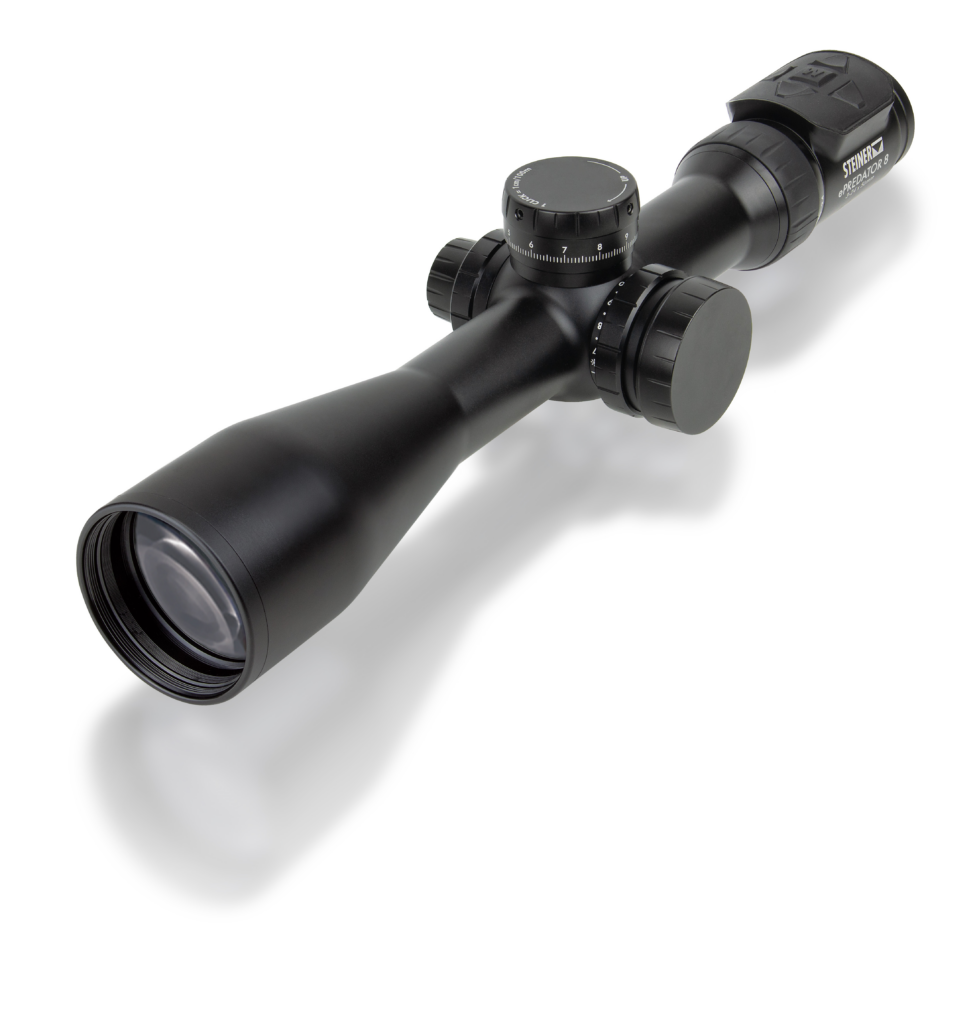
The Steiner ePredator 8 rifle scope proved to be a great addition to my hunting gear.
Its real-time ballistics calculator and display inside the scope eliminate guesswork, with precise turret adjustments in yards with no holdover or guessing.
One of the standout features is its electronic dialing system, which pairs with compatible Steiner rangefinding binoculars. Setup takes a bit of time: You’ll need to connect both the scope and binoculars via Bluetooth and enter all your ballistic data into the Steiner Connect 2.0 app on your smartphone.
Since this process requires Wi-Fi and can be time-consuming, it’s best to do it well before your hunt. However, once set up, the integration creates a smart, connected system that removes much of the guesswork from long-range shooting.
The scope receives real-time data from the paired binoculars, factoring in distance, angle and other variables. After ranging your target with the binos, the system instantly updates the scope’s aiming point.
This technology allowed me to concentrate on other things, like my breathing and trigger pull, because I was confident the scope was perfectly on.
The result was a swift, ethical harvest.