

SCI Advocacy Team 2025 End-of-Year Report
A Breakthrough Year for Hunters’ Rights
2025 was a landmark year for SCI’s Advocacy team
Across courts, legislatures, and international forums, we delivered results that expanded hunting access, strengthened science-based wildlife management, and elevated SCI’s leadership at every level of government.
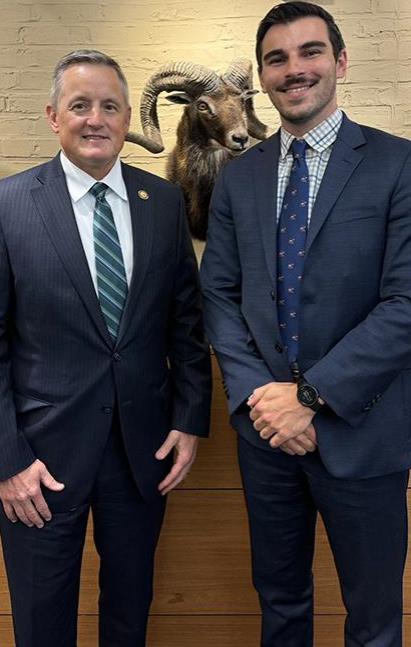
We deepened engagement with the Department of the Interior, meeting regularly with senior officials to keep hunting access front and center. On Capitol Hill, we reinforced ties with our Congressional champions, welcoming more than 200 staff and visitors to the Hunters’ Embassy for our rapidly growing Lunch‑and‑Learn series. Fifty Members of Congress stopped by as well—many posing proudly with our Roosevelt rhino. And when a House Subcommittee sought expertise on reforming abusive litigation, SCI was called to testify.
Our efforts translated into an unprecedented level of success in opening new hunting opportunities across the States. SCI was instrumental in opening Florida’s first black bear season in a decade and Sunday hunting for the first time in Connecticut and Pennsylvania.
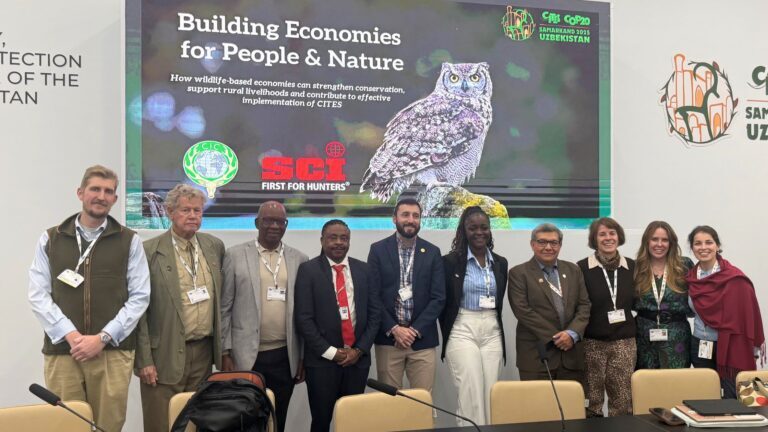
Internationally, we expanded SCI’s partnerships and reach. At the 20th meeting of the Parties to the Convention on International Trade in Endangered Species (CITES), we celebrated a win on bontebok and no significant losses—thanks in part to our new collaboration with the Southern African Development Community. In Canada, the Canada Wildlife Conservation Partners—which SCI co-founded—grew almost immediately from four organizations to 17 members and four affiliates.
Across the country—and across continents—our advocacy translated into real wins for hunters. Below is a summary of what we accomplished together.
Celebrating remarkable new hunting opportunities
2025 will be a “year to remember” for new hunting opportunities. In Florida, the Fish and Wildlife Conservation Commission green-lit a black bear hunt for the first time in a decade—a milestone SCI helped make possible. SCI’s state advocacy team was instrumental from start to finish: in guiding SCI Foundation’s biologist and SCI volunteers who served on the Commission’s technical advisory group, rallying members in support, testifying twice in person, and driving media engagement. SCI’s legal team successfully defended the hunt in court, helping defeat an attempted injunction just days before the season opened. This hunt represents a critical step in managing Florida’s booming bear population and reducing the nation’s second‑highest rate of human‑bear conflicts.
But Florida was not the only state to see new opportunities. Hunters in Connecticut and Pennsylvania gained new days afield thanks to SCI’s years‑long push for the opening of Sunday hunting. SCI President Jeff Meyerl and his grandson were among the first to seize the opportunity—contributing to state wildlife management objectives, especially for managing white-tailed deer.

Driving policy success in the Administration
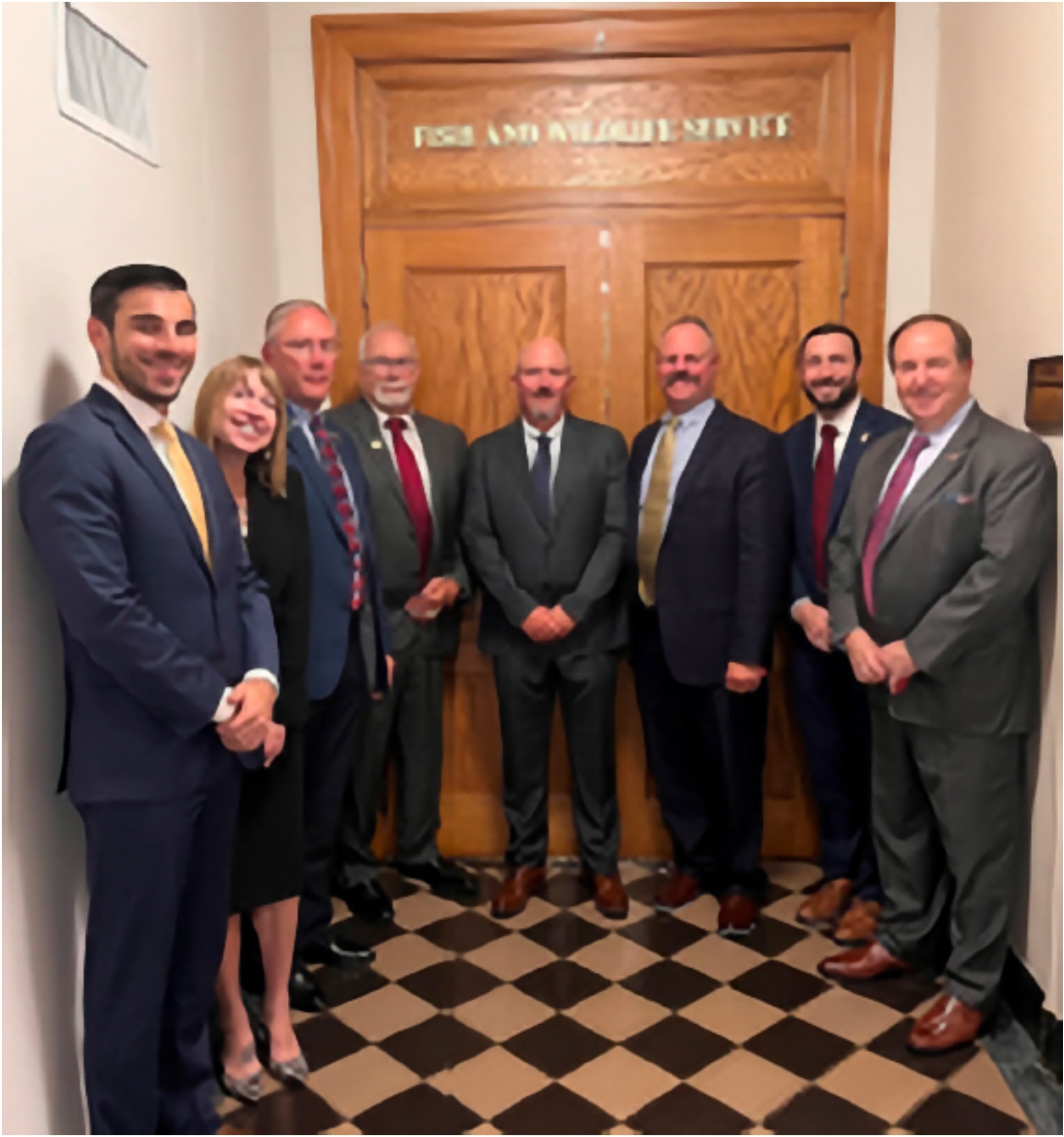
SCI published our Priorities for the New Administration in January 2025. We were hopeful but unsure of what to expect. Twelve months later, SCI’s Advocacy team can report momentum on seven major policy areas, along with progress on ten of thirty‑four specific implementation steps. The Department of the Interior has shown a strong commitment to conservation through hunting, and we plan to build on that progress in 2026.
We continue to press key regulatory reforms. We are still waiting for a response to our petition requesting a long‑overdue update to Endangered Species Act implementation regulations to reduce barriers to international conservation efforts.
In addition, following the decision of the 184 Parties to CITES to delist the bontebok, SCI petitioned the U.S. Fish and Wildlife Service to remove the species from the Endangered Species Act as well—another important step toward reducing trade restrictions that impede conservation.
Significant steps forward in Congress
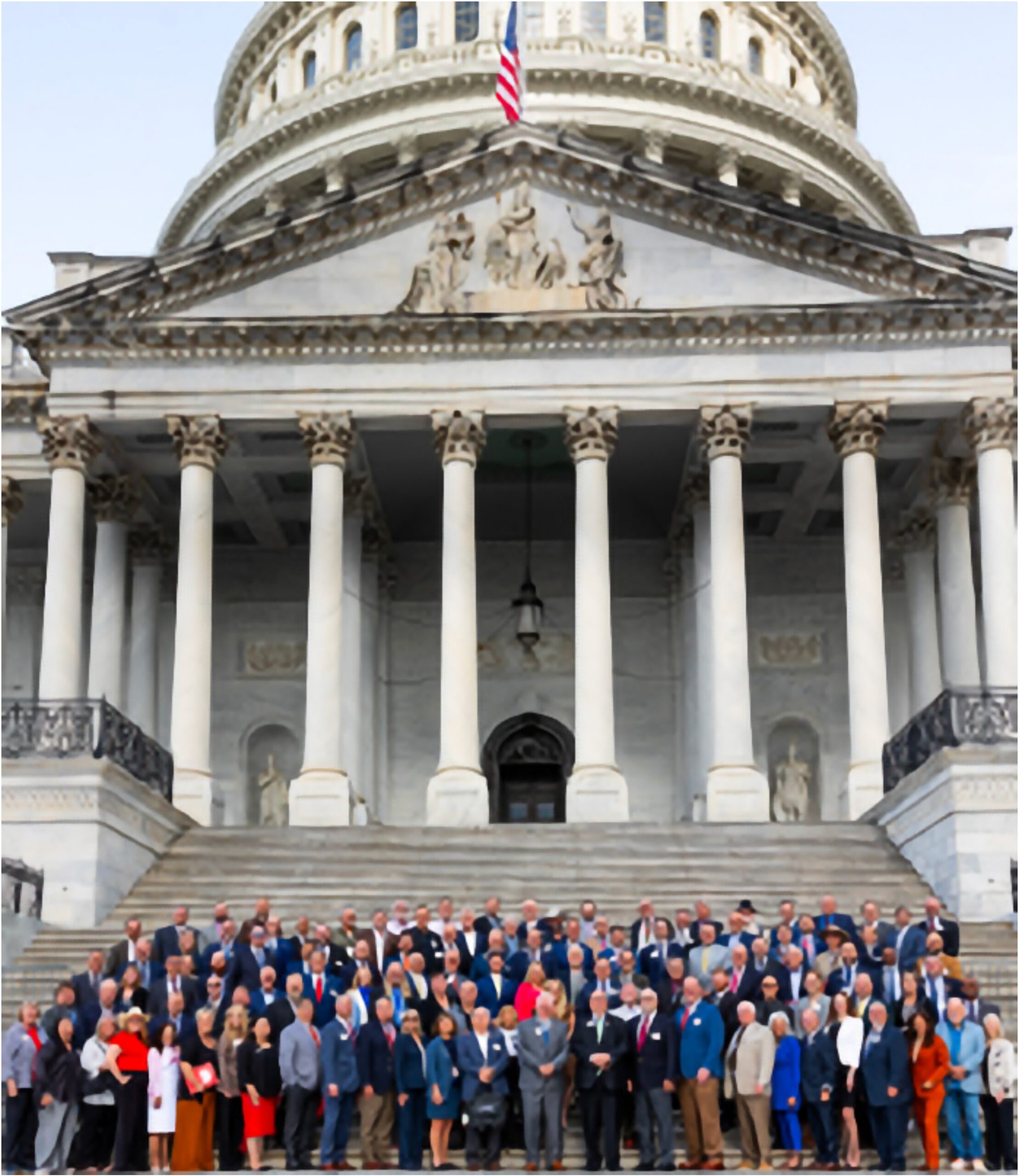
SCI made real progress on key legislative priorities in 2025. In May, SCI’s Advocacy team hosted the largest “Lobby Day” in SCI history, bringing over 100 members to Washington, DC, to meet with lawmakers and advocate for suppressor deregulation, wolf and grizzly bear delisting, and ESA reform.
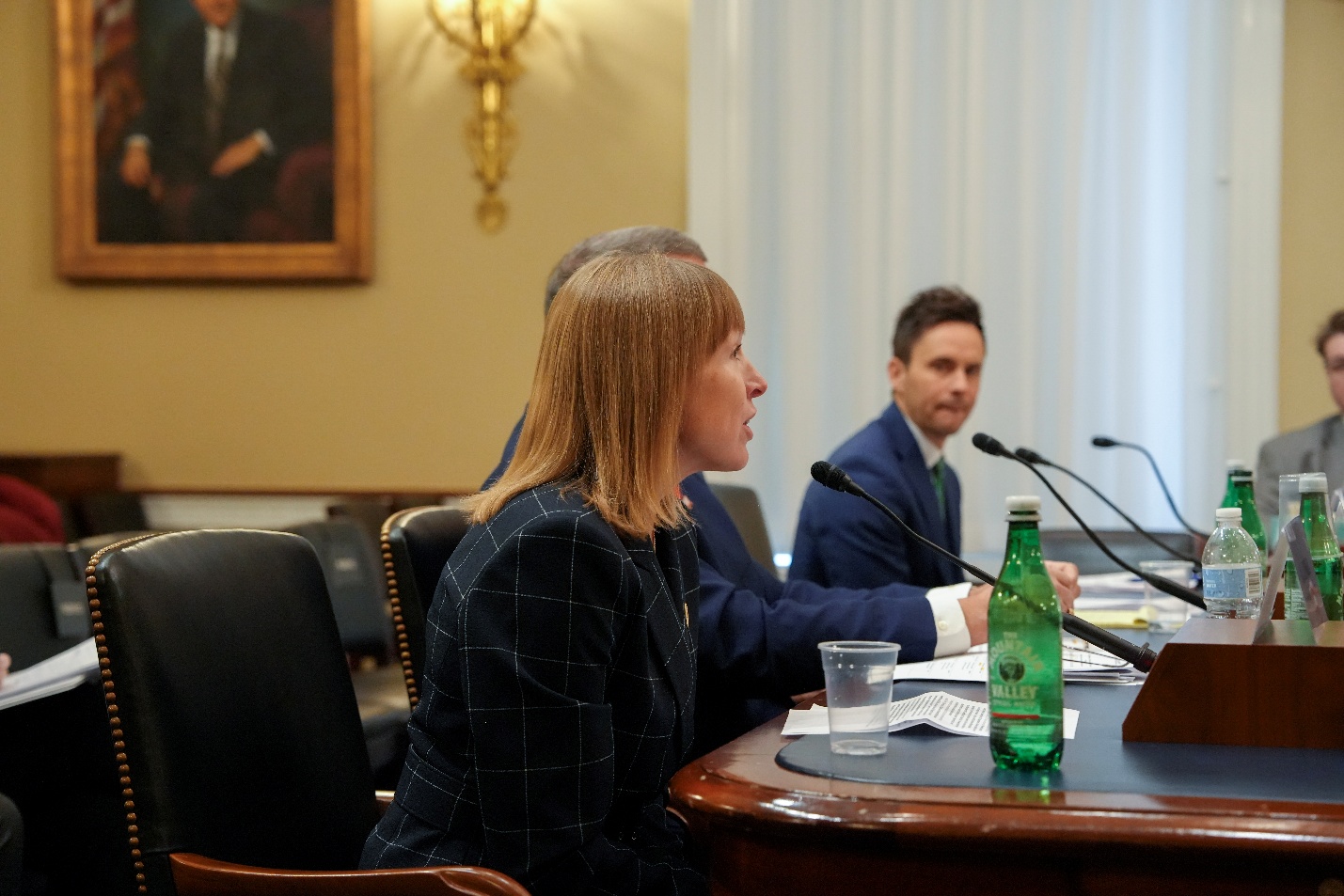
Those efforts have paid off. One of SCI’s top priorities, gray wolf delisting, passed the House of Representatives in a bipartisan vote. SCI is now working with our champions in the Senate to get a vote in that chamber. Three of our top priorities—grizzly bear delisting, traditional ammunition protections, and comprehensive ESA reform—have cleared the House Natural Resources Committee and await a full House vote. Another item, deregulation of suppressors, advanced when the reconciliation bill eliminated the $200 excise tax. And SCI staff provided expert testimony in a Congressional subcommittee on another priority: reforming the Equal Access to Justice Act.
Strong support for the Hunters’ Embassy

The Hunters’ Embassy continues to draw Congressional staff and Members of Congress, as well as industry partners and other dignitaries.
Our “Lunch and Learn” program has become a cornerstone of engagement by offering a monthly educational program on issues of conservation concern, frequently taught by industry experts. In 2025, topics included: ESA delisting to public lands access (with the Public Lands Council), the Wildlife Habitat Recovery Credit (with Wildlife Mississippi), regulation of suppressors (with American Suppressor Association), state wildlife management (with the Association of Fish and Wildlife Agencies), Equal Access to Justice Act reform (with Rocky Mountain Elk Foundation), and U.S. regulation of foreign species. Attendance for these programs has swelled from 20 to nearly 70 lunch attendees. These educational efforts led directly to Advocacy staff testifying before a House Subcommittee on EAJA reform—proof that our outreach drives real policy impact.
We also extend our thanks to the many Members of Congress who visited the Hunters’ Embassy in 2025. From fundraisers to receptions, we welcomed hunting champions from around the country, representing both chambers. These Members have celebrated alongside Ambassadors, key Department of the Interior staff, and state wildlife agency directors—strengthening relationships that foster pro-hunting conservation policies. We look forward to many more events in 2026!
Legal and educational leadership
In 2025, SCI launched the Center for Conservation Law and Education, a 501(c)(3) organization designed to unify our litigation and education missions. Support surged from both members and non‑members, fueling high‑impact legal efforts nationwide. For more information or to donate to the Center for Conservation Law and Education, please visit https://ccle.safariclub.org/
SCI’s Legal Advocacy team secured eight victories in (or outside of) state and federal courts. In addition to preserving Florida’s black bear hunt, we helped preserve access to non-resident brown bear tags in Alaska. We defended hunting rights on private property in Maryland. We safeguarded the confidentiality of hunter data in Texas. And we defended science-based wildlife management in Colorado. Three additional cases successfully concluded through settlement or the withdrawal of harmful agency rules by the National Park Service and Department of Labor.
We faced two defeats. First, a Montana federal court ruled against SCI and partners in a case seeking to put gray wolves in the Northern Rocky Mountains back under federal management. The decision came as no surprise, and we are optimistic about the chances of a full reversal on appeal. Second, SCI’s Benelux Chapter challenged a trophy import ban adopted by the Belgian legislature. Belgium’s Constitutional Court dismissed this challenge, finding the import restrictions did not infringe on constitutional rights. While also a disappointment, each setback has sharpened our strategy and strengthened our resolve. An appeal of the wolf case and continued advocacy is already underway.
Championing science‑based decision‑making

Beyond expanding new hunting opportunities, SCI’s advocacy efforts have helped ensure that decisions by state legislatures and agencies were grounded in science and not emotion. Through testimony, grassroots advocacy, and education, we helped defeat a proposed ban on the use of traditional lead ammunition in Maryland—a mandate that would have hindered deer and coyote management and severely restricted hunting access in the state.
We also helped advance responsible predator management nationally by originating and supporting a key resolution adopted by the Association of Fish and Wildlife Agencies.
And SCI successfully pushed back against state restrictions on Second Amendment rights and imports of African wildlife products, including defeating New York’s “Big Five African Trophies Ban” for another year.
Internationally, SCI’s intervention in Newfoundland prompted a full environmental review for a proposed wind project that threatened caribou, moose, and other wildlife: a meaningful win for habitat protection and Newfoundland’s hunting industry.
Building partnerships in Africa, Canada, and Europe
SCI’s International Advocacy team experienced tremendous growth in 2025. We welcomed a new Africa Liaison to provide technical assistance and promote hunting and sustainable-use conservation in national governments and international meetings. He is based in SCI and SCI Foundation’s newly opened South African office, a strategic hub for conservation issues. We also significantly increased our collaboration with the Southern African Development Community in advance of the CITES Conference of the Parties. And we deepened relationships with professional hunting associations across southern Africa, Canada, and New Zealand through our new Guide and Outfitter Liaison, who attended the Annual General Meetings of these organizations.
In Canada, SCI co‑founded the Canada Wildlife Conservation Partners, a coalition that rapidly expanded beyond its four founding organizations to build a unified national voice for sustainable use and conservation.
SCI has also seen progress in Europe. The European Union, driven by concerns about predation impacts, changed the wolf’s status from “strictly protected” to “protected” under the Bern Convention and Habitats Directive—allowing for more flexible management of wolves and signifying that our educational efforts and engagement are shifting perspectives.
The Hunter Information Service remains busy
More members are finding the Hunter Information Service and seeking assistance, including new members looking for help in researching hunting opportunities and vetting hunting operators. Contacts have grown from 30 to 40 members per month to 100+ per month in 2025. The Hunter Information Service has also helped members resolve issues with import permits and with border inspection agents.
In 2025, the Hunter Information Service helped over 1,200 members with hunting travel, outfitter or destination research, outfitter issues, trophy shipments, and other needs.
Women Go Hunting
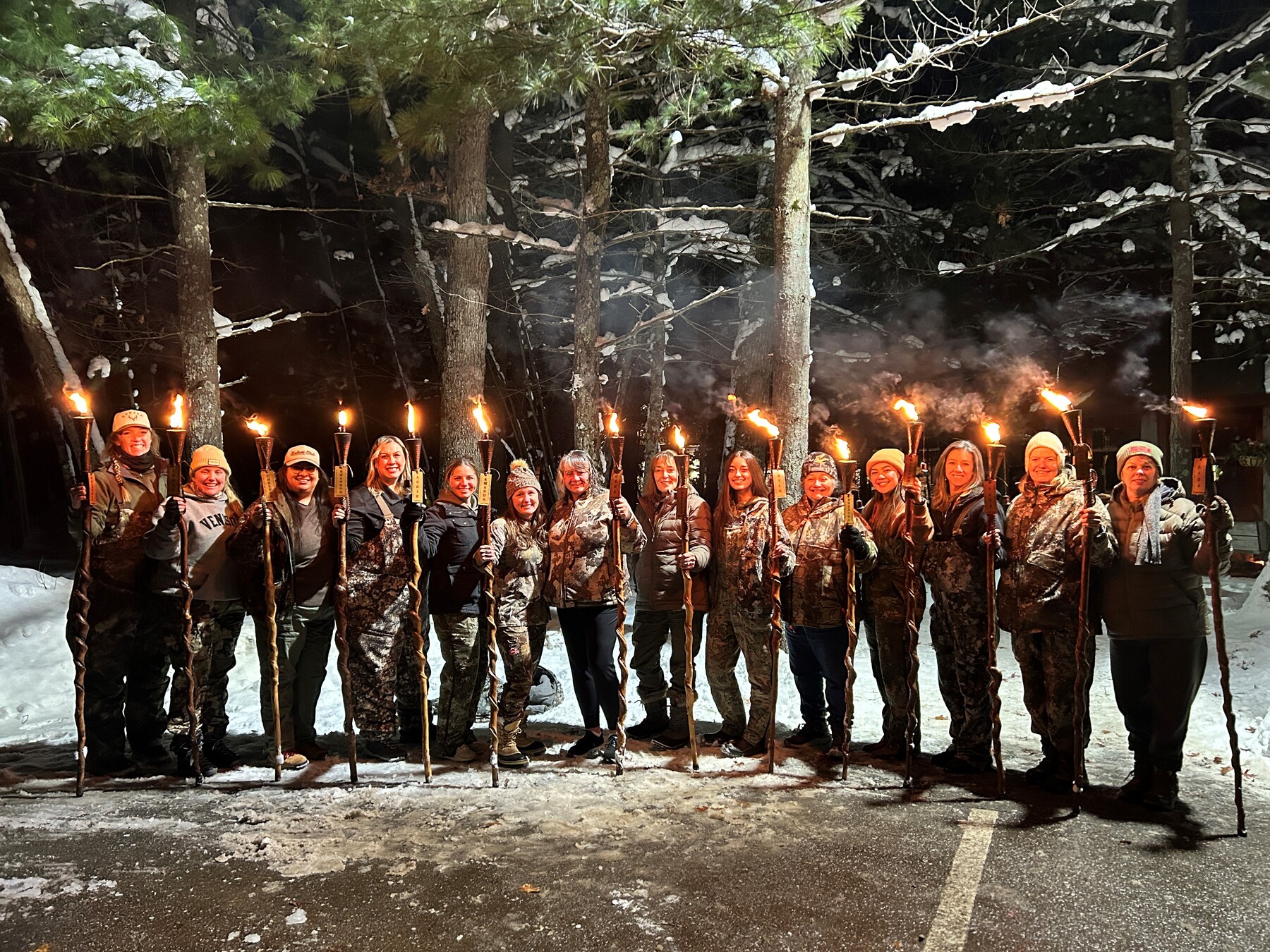
SCI’s Women Go Hunting (WGH) initiative continues to energize female hunters and hunting supporters through events, contests, and communications. For the first time in 2025, WGH hosted a “Learn to Hunt” program at Legends Ranch. Six attendees won their places at the WGH sweepstakes conducted at convention; eight were SCI employees. Four monthly WGH Newsletters have been sent to a growing list of 900+ women, promoting the SCI Convention and encouraging women to participate in hunting opportunities. And online engagement continues to expand. The SCI Women Go Hunting Facebook Group is approaching 600 members.
2025 In The Numbers
35
Events At The Hunters’ Embassy
200+
Attendees at Lunch and Learn Events
50
Members of Congress for Receptions or Fundraisers
7
Priority Bills Passed through Committee or on the Floor
85
Site Visits to State Partners
20
Country Visits for International Advocacy
8
Legal Victories in State or Federal Court
16
Comments Submitted to Federal Agencies
26
Coalition Letters to Federal Agencies or Members of Congress
97
Comments Submitted to State Agencies or Legislatures
4
Comments Submitted to State Agencies or Legislatures
21
Members and Affiliates of the New Canadian Wildlife Conservation Partners
1,200 +
Members Helped by the Hunter Information Service
Looking Ahead
2025 proved what SCI’s Advocacy team can achieve with focus, expertise, and grit. We end the year energized and ready to build on this momentum—expanding opportunities for hunters, defending science‑based management, and strengthening global partnerships.